

Note:
This article was written by a guest contributor from our community. The views and clinical opinions expressed here belong to the author and do not necessarily reflect the opinions or endorsements of Dr Tim Ltd.
 Dr Tim Pearce

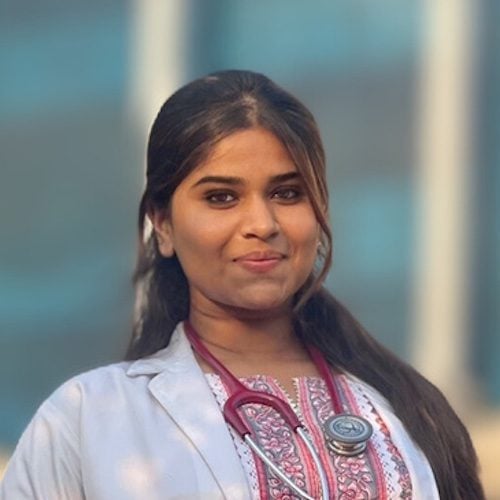
Dr. Rakshitha Jayaprakash, MD, is a future-focused Dermatologist specializing in the high-fidelity science of skin and hair longevity. Her practice applies a futuristic lens to the global beauty landscape, filtering emerging tech through the rigorous standards of basic science and medical ethics. Driven by a “Patient-First” philosophy, Dr. Rakshitha prioritizes long-term biological health over transient aesthetic trends.
https://www.instagram.com/dr.rakshitha.jayaprakash.md/
By Dr. Rakshitha Jayaprakash, MD Dermatologist, Bengaluru Clinical Perspective
The conversation in facial rejuvenation has been shifting for a while now – away from temporary fixes and toward something that feels more honest. Rather than filling space or repositioning tissue, regenerative approaches are trying to change the biological environment: stimulate collagen, support vascularisation, improve dermal density, slow the rate of structural loss. When it works well, the results look natural because they are natural. The tissue is genuinely better, not just augmented.
Modalities like autologous fat grafting, PRP, PRF, exosomes, nanofat, PLLA, and CaHA aren’t new individually. What’s changed is how clinicians are thinking about using them together – and whether combinations actually deliver something the individual components don’t. That question matters, because the space between “mechanistically plausible” and “clinically proven” is wider here than almost anywhere else in aesthetic medicine (Crowley et al., 2021).
Regenerative strategies operate on a different logic to structural interventions. The goal is altering the local tissue environment rather than displacing anatomy – supporting endogenous collagen synthesis, modulating inflammatory cascades, and improving extracellular matrix density over time (Crowley et al., 2021).
The ageing face doesn’t deteriorate in one plane. The deep fat compartments shift, the SMAS loses integrity, the reticular dermis thins – these are simultaneous processes across multiple tissue layers (Li et al., 2022). The theoretical case for multimodal approaches follows directly from this: if different modalities target different stages of the cellular repair cascade, sequencing them makes anatomical sense. The honest caveat is that the clinical evidence for specific combination protocols is still developing, and separating mechanistic logic from verified human data is a critical part of navigating this space responsibly.
The way clinicians think about fat grafting has changed considerably. It started as a volumising tool – and it still is – but the interest has moved toward its cellular content. The adipose-derived stem cells and stromal vascular fraction components within the graft matrix have led researchers to investigate their potential influence on tissue remodelling and the structural quality of the overlying skin envelope (Eppler & Ma, 2025).
The problem that hasn’t gone away is retention variability. A 2025 review in Plastic and Reconstructive Surgery – Global Open reported fat volume retention at one year ranging from 30% to 83% across analysed studies (Zancanaro et al., 2025). That range is wide enough to matter clinically – it reflects how heavily individual biology, processing method, and recipient site conditions influence outcomes. Two patients, same procedure, meaningfully different results.
That variability is exactly why combination approaches have attracted interest. A 2025 review on optimising graft integration described a multicentre RCT where stromal vascular fraction enrichment was associated with significantly improved MRI-confirmed fat retention at both six and 24 weeks compared to standard fat transfer alone (Acharya et al., 2025). The
review noted that while biological adjuncts including PRP, SVF, and adipose-derived stem cells show potential for stabilising the graft microenvironment, the overall data pool remains heterogeneous and further standardised research is needed.
PRP is probably the best-understood regenerative tool in this space, and its mechanism is well characterised – a concentrated payload of growth factors including PDGF, VEGF, and TGF-β released directly into the tissue matrix (Shimizu et al., 2022). What the evidence also consistently shows is that outcomes vary considerably between study cohorts. A 2025 split-face trial in the Journal of Cosmetic Dermatology noted that despite extensive evaluation alongside microneedling and energy-based platforms, PRP preparation standardisation remains an unresolved variable across the literature (Estupiñan et al., 2025).
This matters practically. The same treatment category can produce different results depending on preparation protocol, concentration, and individual platelet biology – variables that patients don’t see and that published studies often don’t account for cleanly.
PRF is a second-generation development – a three-dimensional fibrin matrix that releases signalling proteins more slowly and is structurally better suited to delicate anatomical areas. The evidence base for PRF in facial aesthetics is thinner than for PRP but growing, and the clinical reasoning behind zone-specific use is coherent.
When PRP is combined with fat grafting, the rationale is straightforward: growth factor delivery to support graft vascularisation and integration – addressing one of the central reasons fat doesn’t survive. An earlier but frequently cited clinical review described PRP increasing adipocyte survival in vitro and in animal models, with case data suggesting improved healing and graft outcomes (Gentile et al., 2015). More recent literature has
reinforced this direction, though large-scale RCT data for the combination specifically in facial fat grafting remains limited.
Exosomes are the most talked-about regenerative tool right now – and also the one with the widest gap between clinical enthusiasm and published data. Mechanistically, they’re extracellular vesicles that carry signalling molecules – mRNA, microRNA, proteins, lipids – and communicate directly with recipient cells, potentially influencing collagen synthesis, inflammation pathways, and regenerative signalling (Eppler & Ma, 2025).
The first investigator-blinded split-face trial directly comparing adipose mesenchymal stem cell-derived exosomes to PRP for photoaged skin was published in the Journal of Cosmetic Dermatology in 2025 – and it explicitly noted that no prior trials had made this comparison (Estupiñan et al., 2025). A 2025 narrative review in the Journal of Clinical Medicine described the current evidence base as consisting primarily of preclinical models and small case series (Eppler & Ma, 2025). That’s where it sits right now.
Regulatory status is important context here. As of 2025, exosome products do not hold authorised approval for intradermal injection in major markets – current use is classified as off-label or cosmetic (Eppler & Ma, 2025). This isn’t a paperwork lag; it reflects a genuine evidence gap. Documented adverse events exist – a 2024 case report described localised skin necrosis following intradermal delivery of a lyophilised exosome product (Tawanwongsri & Vachiramon, 2024). Clinicians working with exosomes should be communicating their investigational status clearly and directly to patients. That’s not optional.
Nanofat is processed fat – mechanically emulsified to remove intact adipocytes and concentrate the stromal vascular fraction. It doesn’t add volume the way standard fat grafting does, and it’s not trying to. The clinical
reasoning is about skin quality – texture, fine lines, surface characteristics – particularly in areas where structural volume isn’t the limiting factor.
A 2025 narrative review described nanofat combined with PRP as a documented approach for simultaneously addressing tissue quality and signalling support (Eppler & Ma, 2025). The limitation the literature consistently flags is preparation variability – how much the processing method influences the final cellular composition, and therefore outcomes. That variable is largely invisible in published study designs but clinically significant.
Poly-L-lactic acid has been in clinical use long enough that the evidence base is more mature than for most other regenerative agents. A 2025 review in the Aesthetic Surgery Journal analysed 63 studies from 2013 to 2025 and described a meaningful shift in how the field understands PLLA – from a passive volumising material to an active biostimulator that engages M2 macrophages and host fibroblasts, driving progressive type I collagen deposition and measurable dermal thickening over months (Goldie et al., 2025; Zancanaro et al., 2025).
Combination approaches are appearing more frequently in the literature. Data within a recent review suggested that combining PLLA with fractional laser platforms was associated with greater increases in dermal thickness compared to PLLA alone, and that layering PLLA with HA allows clinicians to address structural support and skin quality simultaneously within a single treatment plan (Musumeci et al., 2024). These are promising signals, though the evidence remains at the level of small studies and expert consensus rather than large-scale RCTs.
One of the more interesting recent developments is pre-mixed hybrid formulations – HA combined with CaHA or PLLA microspheres – designed to deliver immediate structural correction alongside delayed biostimulatory collagen induction. A 2024 review described the clinical rationale as coherent and supported by emerging data, while noting the long-term evidence profile is still developing (PMC, 2024). The sequential version of this principle – HA for immediate results, biostimulator for the longer biological arc – is increasingly applied in clinical practice, though the evidence for specific sequencing approaches remains largely observational.
The regenerative combinations space is where clinical intuition is running most clearly ahead of published evidence. The mechanistic logic of stacking biologics is sound – different agents targeting different parts of the repair cascade, over different timelines, in different tissue planes. What the literature hasn’t yet delivered is standardised, head-to-head human data showing that specific combinations consistently outperform monotherapy in a reproducible way.
That gap matters for how the conversation with patients is framed. Combinations are being offered and, in many cases, producing good outcomes. But “this works” and “the evidence base rigorously supports this” are different statements – and patients deserve to understand the distinction (Eppler & Ma, 2025).
What the evidence does show clearly is that individual biology dominates outcomes in ways that protocols can’t fully control. Fat retention variability, differences in platelet concentration, baseline cellular responsiveness – these aren’t secondary variables. They’re primary factors governing reproducibility (Crowley et al., 2021). A clinician choosing regenerative combinations needs to be assessing individual tissue, not applying fixed protocols. That’s the difference between using the biology and just adding more of it.
Regenerative combinations in facial maintenance are built on solid biological logic and an expanding – but still maturing – evidence base. The case for multimodal approaches is real; so are the gaps. The honest work for clinicians is knowing exactly where each modality sits on the spectrum from mechanistically plausible to rigorously proven – and communicating that clearly, rather than letting the excitement of emerging science outrun what the data actually supports.
Food supplements should not replace a varied diet and healthy lifestyle.
Dr. Rakshitha Jayaprakash is an MD Dermatologist and Founder of Legacy Concierge Medicine, Bengaluru. Her clinical focus spans regenerative aesthetics, longevity medicine, and precision health. Instagram: @dr.rakshitha.jayaprakash.md
This article was written by a guest contributor from our community. The views and clinical opinions expressed here belong to the author and do not necessarily reflect the opinions or endorsements of Dr Tim Ltd.
Dr Tim Pearce MBChB BSc (Hons) MRCGP founded his eLearning concept in 2016 in order to provide readily accessible BOTOX® and dermal filler online courses for fellow Medical Aesthetics practitioners. His objective was to raise standards within the industry – a principle which remains just as relevant today.
Our exclusive video-led courses are designed to build confidence, knowledge and technique at every stage, working from foundation level to advanced treatments and management of complications.
Thousands of delegates have benefited from the courses and we’re highly rated on Trustpilot. For more information or to discuss which course is right for you, please get in touch with our friendly team.