



• Mail us: support@drtimpearce.com
  • Trustpilot
Dr Tim Pearce, eLearningDr Tim Pearce, eLearningDr Tim Pearce, eLearning Dr Tim Pearce, eLearning
  • eLearning Courses
        • ELEARNING COURSES

        • Techniques
          • The Technique Library
          • BOTOX® Foundation Course
          • Pro Tox
          • Dermal Fillers Foundation Course
          • 8D Lip Design
          • Julie Horne Directs, Dr Tim Injects – February 2023
          • Eyelash Enhancement Serum Course
          • Anatomy360
          • Art Codes
        • Complications
          • Botulinum Toxin Complications Mastery
          • Dermal Filler Complications Mastery
          • Elective Lip Reversal
        • Profinity
        • Wellness
          • How To Introduce Longevity To Your Aesthetics Clinic
        • Marketing
          • DCAM 2.0
          • Canva Mastery: A Step-by-Step Guide
          • Email Marketing Course
          • Industry Photography Secrets
          • How to find your voice with video
        • Other Services
          • DPP for V300 Service
        • Packages
          • Foundation eLearning Package – SAVE 10%
          • Complications eLearning Package – SAVE 10%
          • Techniques eLearning Package – SAVE 20%
          • Marketing eLearning Package – SAVE 20%
          • Full eLearning Package – SAVE 35%
        • Reviews and Testimonials
        • FAQ – Online Courses
  • Downloads
        • Complications
          • 13 Extra Risky Injection Areas: Facial Vessel Map
          • Aspirating Experiment Test Results
          • Bruising Checklist: Prevent & Minimise Bruises from Injectables
          • Dermal Filler Complications: The Essential Guide
          • Delayed Onset Nodules: How To Diagnose And Treat
          • Diagnosing Complications: 7 Steps To Great Advice
          • Emergency Reversal Protocol
          • How To Avoid Causing a Lateral Rectus Palsy From Botulinum Toxins
          • Hyalase Consent Form: Downloadable Template
          • Lumps in Lips Guide: How to Diagnose, Manage & Treat
          • Tear Trough Oedema Protocol
          • Does Covid-19 Vaccine Cause Dermal Filler Reactions?
        • Injection Techniques
          • 26 Essential Injection Patterns For Botulinum Toxin
          • Botox Calculator
          • BOTOX Lesson – Gummy Smile
          • BOTOX Lesson – Hooded Eyes
          • Frequently Used Filler Volumes Facial Map
          • How To Improve Your Needle Control: 6-Step Blueprint
          • How to Prepare BOTOX – Step by Step Guide
        • Consultation Skills
          • Body Dysmorphia & Modification Checklist
          • Is It Safe To Treat? 5-Step Contraindication Check List
          • Medical Model For Cosmetic Procedures: An Essential Guide
        • Lips
          • Lip Consultation Question Checklist
          • Lip Anatomy Lesson
          • Common Needle/Cannula Choices For Lips
          • Lip Filler Aftercare Pack for Your Patients
          • Lip Design Blueprint – 4 Steps To Perfect Lip Augmentation
          • Master the Basics of Julie Horne’s Lip Technique
        • Longevity
          • Does HRT Increase Cancer Risk? Guide for Clinicians
          • Educating Patients About How Sugar Exacerbates Aging
          • How to Reduce Biological Age for Your Patients
        • Business & Marketing
          • Annual Profit Calculator
          • 5 Steps to Create a Successful Aesthetics Business
          • Injector’s Cheat Sheet – 7 Social Media Post Types
          • 7 Deadly Hashtag Sins
          • 7 Secret Locations to get Instagram Followers
          • 9 Video Marketing Mistakes
          • 15 Easy Instagram Reels Ideas
          • 3 Time-Saving Hacks for Social Media
          • Personal Branding Starter Kit
          • Value Audit Template: Price-per-1ml
          • World’s Top 5 Filler Brands – Survey Results
  • Products
    • Artistic Anatomy Poster Collection
    • Top 3 Posters Bundle
    • Original Anatomy Poster
    • Beautiful Lip Anatomy Poster
    • Download Pack – Forms & Leaflets
  • Blog
    • Meet the Writers
  • About
    • Dr Tim Pearce
    • Miranda Pearce
    • Careers & Recruitment
    • Become a Model
  • Contact
  • Login

Login

Reducing Bruising After Filler: Top Techniques

Blogs

  • ALL
  • Complications
  • Injection Techniques
  • Consultation Skills
  • Lips
  • Business & Marketing
You may be interested
Reducing Bruising After Filler: Top Techniques

Reducing Bruising After Filler: Top Techniques

November 12, 2026

High-Functioning Body Dysmorphic Disorder in Aesthetic Practice

High-Functioning Body Dysmorphic Disorder in Aesthetic Practice

November 10, 2026

L-Theanine for High-Stress Patients: Protecting Collagen and Aesthetics from Within

L-Theanine for High-Stress Patients: Protecting Collagen and Aesthetics from Within

November 5, 2026

Clinical Growth Starts With Learning to See Beyond the Procedure

Clinical Growth Starts With Learning to See Beyond the Procedure

November 3, 2026

Superficial Fat Pads and the Aesthetic Consultation

Superficial Fat Pads and the Aesthetic Consultation

October 29, 2026

Reducing Bruising After Filler: Top TechniquesDr Tim Pearce
November 12, 2026

Treatment Planning, Stabilisation, and Patient Conversations That Protect Your Practice

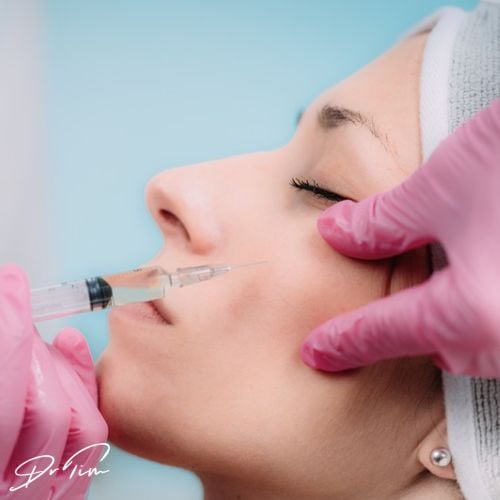
dermal filler bruisingArthur Swift’s saying that “if you bruise them you lose them” captures the commercial reality of bruising in aesthetic practice with more clarity than any clinical paper, because it puts the business consequence of bruising in a single line. A patient who walks out of your clinic with a visible bruise on their face is fundamentally different next week from a patient who walks out looking clean, and the difference shows up in retention rates, referral conversations, and the trust they bring to their next appointment. Minimising bruising is therefore not a cosmetic concern about the day of the appointment. It is one of the central skills that build a practice, generate trust, and keep patients coming back.

The working philosophy is a zero-tolerance approach to bruising while accepting that you will never get the rate to zero. Eliminating bruising entirely would mean not performing procedures at all, which removes the result the patient came in for. The question is how to chip away at the bruising rate to the lowest figure compatible with delivering excellent aesthetic results, and the answer involves understanding what a bruise actually is, controlling the factors that influence its size and frequency, and handling the patient conversation with the right balance of acknowledgement and accountability when one does appear.

What a Bruise Actually Is and Why Patients Need to Know

A bruise is caused by the needle passing through a blood vessel that the injector cannot see, with blood then leaking out of that vessel for a period of time and depositing under the skin. Most patients without medical training have never thought about this mechanism, and their working assumption is that a bruise represents an injury caused by the injector. When the underlying mechanism gets explained, you can watch the look of understanding land on their face as they realise that bruising is a structural consequence of injection rather than evidence of poor technique.

The patient who understands what a bruise is becomes a more forgiving patient when one occurs. Without that understanding, every bruise reads as the injector’s fault. With it, the patient can locate the bruise in the spectrum of normal procedural outcomes and respond proportionately. This consultation work matters because the patient relationship after a bruise is shaped almost entirely by what the patient believes the bruise represents, and that belief is set by whether anyone has ever explained the underlying biology to them.

The Factors That Determine Bruise Size and Frequency

Several distinct variables influence the size and frequency of bruising, and each one offers a separate point of control.

  • Skin blood flow is the first, with hot weather producing dilated cutaneous vessels because the skin functions as the body’s cooling organ. A UK summer heatwave produces a noticeable spike in bruising photographs across practitioner forums for exactly this reason, with more blood in the skin meaning more blood available to leak from any punctured vessel and more dilated vessels available to be punctured in the first place.
  • Cardiac output is the second variable, with a nervous patient whose heart is racing presenting a higher bruising risk than a calm patient at rest.
  • Medication is the third, with aspirin and similar agents extending clotting time and producing more bruising for any given vascular puncture. When you see a small bleed at the end of an injection in a patient on aspirin, holding pressure for longer than you would for an unmedicated patient meaningfully reduces the bruising that follows.

The size of the hole made by the instrument also matters, both at the skin surface and inside the tissue at the vessel itself. Looking for visible veins before injecting, choosing the needle gauge deliberately, and injecting gently with a cannula all influence the size of any hole made in a vessel, which in turn determines how much blood can leak before the clot forms. The number of holes is the most direct lever of all, because the bruising rate correlates with the number of skin penetrations no matter how clean the technique behind each one. Techniques that maximise penetrations to deliver a result essentially maximise bruising potential, and the question for any injector is whether the same volume of product could be placed in the same position through fewer entries.

Treatment Planning as Bruising Prevention

The treatment plan is where bruising prevention actually happens, before the patient is touched.

  • The first planning question is the aesthetic goal, whether that is jawline enhancement, lip projection, or something else entirely.
  • The second is the underlying anatomy, with particular attention to where arteries run in the treatment area because puncturing an artery produces a much larger haematoma than puncturing a small vein. Knowing where the major vessels sit allows the injection plan to navigate around them, which reduces the statistical risk of a significant bleed even though small capillaries will always be encountered.
  • The third planning question is whether the procedure can be done with fewer injections, because almost every standard injection pattern can be reconfigured to deliver the same product to the same location through fewer skin entries. A pattern that uses seven penetrations can usually be redesigned to use two, with the trade-off being slightly different placement technique rather than a different result. The reduction in bruising risk from cutting penetration count is dramatic, and it costs almost nothing aesthetically.
  • The fourth planning question is instrument choice. Cannula use is one of the main routes to reducing bruising because the entire treatment can run through a single pilot hole rather than dozens of needle entries. Where a treatment area can be reached effectively with a cannula and the product is suitable for cannula delivery, the bruising rate drops sharply, and this is one of the dominant clinical reasons to choose cannula over needle when the aesthetic outcome allows it.

Stabilisation and the Millimetre-Perfect Injection

Style and technique influence bruising as much as planning does, and the practical setup of the injection space matters more than it might appear. Working from one side of the bed because the room layout forces it produces less control than working from a position where the body is properly squared to the patient, and that control gap shows up in bruising rates across the day’s caseload.

The stabilisation principle is to lock every part of the body to something solid except the thumb and forefinger doing the actual injection. Feet planted squarely on the floor, pelvis rested against the bed, one arm resting on the shoulder of the bed, the other arm pulled in close to the side, and the injecting hand stabilised against the patient’s face, all combine to leave only the fingers free to control the needle tip. The result is millimetre-perfect placement that holds across thirty or forty injections in a treatment.

A clinician injecting with only the needle tip touching the patient and the rest of the body free to move is a clinician out of control, with every shift of posture or balance translating into millimetre variations at the tip. A millimetre too high, a couple of millimetres too deep, a fractional drift in penetration depth, and the bruising risk multiplies across the volume of injections any given session involves. Stabilisation is not a comfort issue. It is a clinical control issue with direct consequences for bruising rates.

Anatomy Resolution and the Last Thought Before Injection

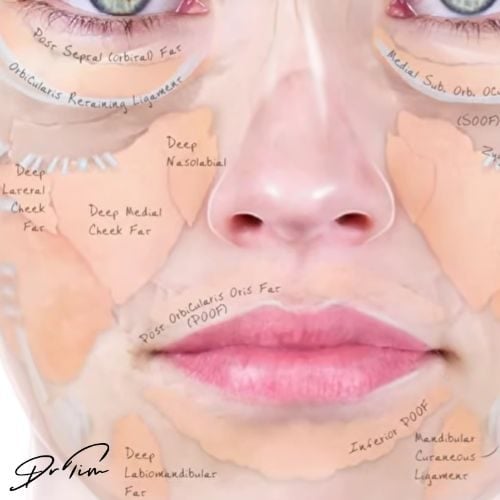
Mental anatomy resolution is the other half of technique control. Looking at anatomical pictures and overlaying them in the mind’s eye during injection produces the kind of detailed awareness that creating those pictures yourself in graphic design software develops, because actually placing an artery on a digital diagram forces you to think about how it relates to muscle insertion, muscle depth, skin depth, and the volume of the structure being treated.

The last thought before any injection is the anatomy. Treatment planning has already navigated around the major vessels, and the final moment before the needle enters is the mental check on exactly where the product is going and how that placement relates to what you do not want to happen. Thinking this way during every injection improves technique automatically because every needle pass is being navigated relative to the anatomy in real time. The process of improving anatomy resolution is endless, with new layers of detail continuing to refine the picture across a career, but the discipline of laying that anatomy over each injection is what turns the knowledge into a clinical asset. Combining this anatomical discipline with using anatomy to explain ageing and build trust elevates both safety and patient confidence.

Patient Selection and Aftercare Advice

Some patient factors are worth filtering for and adjusting around without being absolute contraindications. Aspirin and warfarin do not rule out treatment, but they require treatment plan adjustments that account for delayed clotting. Patient behaviour after the appointment also influences bruising, with one documented case of a patient who runs marathons performing a long run the day after tear trough treatment and returning with two black eyes because the cardiac output through partially clotted vessels reopened the bleeding for the duration of the run.

Aftercare advice that reduces bruising centres on:

  • avoiding exercise,
  • avoiding heat exposure that dilates cutaneous vessels and increases blood flow to the treated area, and
  • avoiding excessive massage of bruised areas because keeping the blood flow moving through prevents the clot from establishing.

These instructions are straightforward to communicate at the end of an appointment and they meaningfully change the bruising trajectory over the following days.

Menstrual cycle effects on bruising rates are often mentioned but rarely supported by clear evidence, with ops and gynae research not having found a difference in bleeding risk across the cycle, though the proportion of blood in the skin may genuinely vary. The practical position is that this is not worth filtering patients on, since you cannot pin appointments to specific dates of the cycle reliably, and most bruising comes down to where the needle went rather than where the patient is in her cycle.

The Conversation When a Bruise Appears

The patient relationship after a bruise is shaped by the conversation you have when they see it. Many clinicians feel bad in this situation and apologise repeatedly, which actually makes the patient more uncertain rather than more reassured. The right tone acknowledges that the bruise is unlucky and bad for the patient without framing it as the injector’s fault, because bruising is inherent to the procedures we perform and is not a failure of technique.

A useful framing is to say that you are sorry the patient has been unlucky, that bruises like this are uncommon in your practice, that you are sad it has happened because you like them, and that you do not want bruises to happen to any of your patients. The patient does not want to think you have done something wrong, even when they are upset about the bruise, and language that locates the event in the normal spectrum of procedural outcomes prevents the corrosive frustration of believing it should never have happened.

The time course matters to give. A small bruise typically clears in around 10 days. The largest bruises observed have taken up to five weeks to disappear completely. Younger patients with smaller bruises clear them quickly. Older patients with larger bruises and paler skin may see residue for up to six weeks. Knowing the timeline removes the uncertainty that drives most of the post-bruise patient distress.

Arnica has no scientific evidence supporting its effect on bruising, but the placebo effect is real, and a patient who wants to use it should not be discouraged. Refusing to recommend things you cannot back up evidentially is the right position. Allowing patients to use harmless adjuncts that they believe will help is also the right position, because the placebo benefit they experience is genuine even when the pharmacology is not.

Want to overcome your fear of complications, confidently master anatomy and 10x your injection skills? Join us for one of Dr Tim’s FREE upcoming webinars. 

Ready to master deep fat pad anatomy and transform your consultation approach?

Join Dr. Tim's upcoming webinar where you'll explore the specific locations and volumes of deep fat compartments, understand when to inject deep versus superficial layers, and develop the anatomical communication skills that build patient trust and improve treatment outcomes.

Register for the Free Webinar →

Learn to see facial anatomy the way expert injectors do, enabling treatment plans based on structural understanding rather than surface-level symptom chasing.

Anatomy Webinar
Dr Tim Consultation Anatomy

Dr Tim Pearce eLearning

Dr Tim Pearce MBChB BSc (Hons) MRCGP founded his eLearning concept in 2016 in order to provide readily accessible BOTOX® and dermal filler online courses for fellow Medical Aesthetics practitioners. His objective was to raise standards within the industry – a principle which remains just as relevant today.

Our exclusive video-led courses are designed to build confidence, knowledge and technique at every stage, working from foundation level to advanced treatments and management of complications.

Thousands of delegates have benefited from the courses and we’re highly rated on Trustpilot. For more information or to discuss which course is right for you, please get in touch with our friendly team.

Share This Article
Facebook Twitter Pinterest Linkedin
Prev Post

Related Articles

High-Functioning Body Dysmorphic Disorder in Aesthetic Practice Bestseller

High-Functioning Body Dysmorphic Disorder in Aesthetic Practice

November 10, 2026

High-Functioning Body Dysmorphic Disorder in Aesthetic Practice
By Andrea Callaway
November 10, 2026

High-Functioning Body Dysmorphic Disorder in Aesthetic Practice

READ MORE
L-Theanine for High-Stress Patients: Protecting Collagen and Aesthetics from Within Bestseller

L-Theanine for High-Stress Patients: Protecting Collagen and Aesthetics from Within

November 5, 2026

L-Theanine for High-Stress Patients: Protecting Collagen and Aesthetics from Within
By Andrea Callaway
November 5, 2026

L-Theanine for High-Stress Patients: Protecting Collagen and Aesthetics from Within

READ MORE
Clinical Growth Starts With Learning to See Beyond the Procedure Bestseller

Clinical Growth Starts With Learning to See Beyond the Procedure

November 3, 2026

Clinical Growth Starts With Learning to See Beyond the Procedure
By Andrea Callaway
November 3, 2026

Clinical Growth Starts With Learning to See Beyond the Procedure

READ MORE

Add your Comment

Popular Courses

BOTOX® Foundation Course

BOTOX® Foundation Course

Pro Tox

Pro Tox

8D Lip Design

8D Lip Design

SEE MORE

CONTACT US

    contact injection
    Dr Tim Pearce

    Improve your medical
    aesthetics business

    • Home
    • Courses
    • Products
    • Downloads
    • Blog & News
    • About Us
    • FAQs
    • Terms and Conditions
    • Website Terms Of Use
    • Privacy Policy

    Get In Touch

    ✉️ support@drtimpearce.com

    ProFinity App ProFinity App

    © Copyright Dr Tim Ltd, 2026
    We use cookies on our website to give you the most relevant experience by remembering your preferences and repeat visits. Read More. By clicking “Accept All”, you consent to the use of ALL the cookies. However, you may visit "Cookie Settings" to provide a controlled consent.
    Cookie Settings Reject All Accept All
    Manage consent

    Privacy Overview

    This website uses cookies to improve your experience while you navigate through the website. Out of these, the cookies that are categorized as necessary are stored on your browser as they are essential for the working of basic functionalities of the website. We also use third-party cookies that help us analyze and understand how you use this website. These cookies will be stored in your browser only with your consent. You also have the option to opt-out of these cookies. But opting out of some of these cookies may affect your browsing experience.
    Necessary
    Always Enabled
    Necessary cookies are absolutely essential for the website to function properly. These cookies ensure basic functionalities and security features of the website, anonymously.
    CookieDurationDescription
    cookielawinfo-checkbox-analytics11 monthsThis cookie is set by GDPR Cookie Consent plugin. The cookie is used to store the user consent for the cookies in the category "Analytics".
    cookielawinfo-checkbox-functional11 monthsThe cookie is set by GDPR cookie consent to record the user consent for the cookies in the category "Functional".
    cookielawinfo-checkbox-necessary11 monthsThis cookie is set by GDPR Cookie Consent plugin. The cookies is used to store the user consent for the cookies in the category "Necessary".
    cookielawinfo-checkbox-others11 monthsThis cookie is set by GDPR Cookie Consent plugin. The cookie is used to store the user consent for the cookies in the category "Other.
    cookielawinfo-checkbox-performance11 monthsThis cookie is set by GDPR Cookie Consent plugin. The cookie is used to store the user consent for the cookies in the category "Performance".
    viewed_cookie_policy11 monthsThe cookie is set by the GDPR Cookie Consent plugin and is used to store whether or not user has consented to the use of cookies. It does not store any personal data.
    Functional
    Functional cookies help to perform certain functionalities like sharing the content of the website on social media platforms, collect feedbacks, and other third-party features.
    Performance
    Performance cookies are used to understand and analyze the key performance indexes of the website which helps in delivering a better user experience for the visitors.
    Analytics
    Analytical cookies are used to understand how visitors interact with the website. These cookies help provide information on metrics the number of visitors, bounce rate, traffic source, etc.
    Advertisement
    Advertisement cookies are used to provide visitors with relevant ads and marketing campaigns. These cookies track visitors across websites and collect information to provide customized ads.
    Others
    Other uncategorized cookies are those that are being analyzed and have not been classified into a category as yet.
    SAVE & ACCEPT

    Technique library register

    ×

    Injector Quiz Popup

    ×