
Note:
This article was written by a guest contributor from our community. The views and clinical opinions expressed here belong to the author and do not necessarily reflect the opinions or endorsements of Dr Tim Ltd.
 Dr Tim Pearce

Dr. Rakshitha Jayaprakash, MD, is a future-focused Dermatologist specializing in the high-fidelity science of skin and hair longevity. Her practice applies a futuristic lens to the global beauty landscape, filtering emerging tech through the rigorous standards of basic science and medical ethics. Driven by a “Patient-First” philosophy, Dr. Rakshitha prioritizes long-term biological health over transient aesthetic trends.
https://www.instagram.com/dr.rakshitha.jayaprakash.md/
By Dr. Rakshitha Jayaprakash, MD Dermatologist, Bengaluru Clinical Perspective
Ten years ago, a non-surgical facelift mostly meant toxin and filler. Today the conversation looks very different, subdermal lasers, cog threads, biostimulators, energy devices, and injectables are all in play, often in combination, often on the same patient. That expansion is genuinely exciting. It’s also where a lot of confusion lives, for patients and, if we’re honest, sometimes for clinicians too.
The question worth asking isn’t just “does this work?” It’s “what does this tool actually do, where does it fit, and critically, where does it not?” This article works through each category with that in mind.
Facial ageing isn’t one problem. It’s several happening at once, the skin thins, fat redistributes, ligaments loosen, and the underlying bone changes over time. No single treatment addresses all of that. Which is why thinking in terms of layers and timelines, rather than single modalities, has become the more clinically useful framework.
The catch is that multimodal doesn’t mean more is better. Each tool needs a clear reason to be there, a specific tissue target, a specific problem it’s solving. When that clarity is missing, treatments stack up without adding up. What the literature increasingly reflects, even if it doesn’t always say it directly, is that the sophistication isn’t in the tools themselves. It’s in understanding how they interact, and what choosing one means for everything that comes after.
Think of this as a minimally invasive tool that works from the inside out. A fine optical fibre is introduced into the subdermal tissue and delivers laser energy that heats and disrupts fat and connective tissue at a localised level. There are two things happening: an immediate contraction effect, and a slower collagen remodelling process that continues for months. Those are two separate timelines, and treating them as one is where expectations can get mismanaged.
A 2024 systematic review in Aesthetic Plastic Surgery looked at 23 studies across facial and neck applications and reported a favourable safety profile across laxity, contouring, and wrinkle-reduction indications (Lotfi et al., 2024). A 2025 prospective case series in the Journal of Cosmetic Dermatology examined a combined subdermal and fractional 1470nm approach in patients with hemifacial asymmetry, describing improvements in laxity and tissue compaction, while the authors were clear that small sample sizes and the absence of randomised trial data limit how far those findings can travel (Proietti et al., 2025).
The evidence base for this technology is still maturing. Most of it sits at the level of case series and observational studies, which means the mechanism is better understood than the outcomes are. And as with any technique that works in a tissue plane, results are deeply tied to operator skill and patient selection, two things studies can acknowledge but rarely measure.
Threads do something none of the other tools in this category do: they physically reposition tissue immediately. That’s their primary function. The collagen stimulation that follows is real, but it’s secondary, and the two effects play out on very different timescales. A lot of the misaligned expectations around threads come from conflating them.
A 2023 Vectra 3D study in the Journal of Cosmetic Dermatology described this as the first objectively measured evidence of non-surgical anatomical lifting with threads, reporting mean horizontal displacement of approximately 2.8mm, while explicitly calling for more research to validate the findings. The same study highlighted that placement zone matters considerably, with mobile facial areas presenting more challenges to thread fixation than fixed lateral zones (Journal of Cosmetic Dermatology, 2023).
A 2025 observational study combining thread lift with focused ultrasound reported sustained laxity improvements during follow-up, though the retrospective design limits the strength of those conclusions (PMC, 2025). A 2025 case series combining cog threads with botulinum toxin in ten patients found 90% of participants reporting subjective improvement in skin texture at four months, with mild and transient adverse events (Aliyeva et al., 2025).
Documented complications include thread migration, dimpling, and cutaneous exposure. Frequency data across the literature remains limited. What the studies don’t capture, and what tends to come up more in clinical conversations than published papers, is the relationship between threads and future surgical planning. Altered tissue planes matter when a surgeon is dissecting later, and that dimension is underrepresented in the current evidence.
What also goes largely undiscussed is the human variable on both sides. A well-selected patient in the wrong hands can get a poor result. A skilled clinician working on the wrong patient anatomy, someone with too much laxity, or the wrong tissue quality for mechanical repositioning, can get the same. Threads attract criticism as a category partly because this variable is so rarely acknowledged. The tool isn’t the issue. The gap between what it can do and what the clinician understands it to do, that’s where things go wrong.
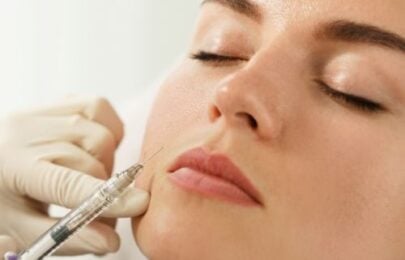
HA fillers are the most studied option in this toolkit and the most forgiving, reversibility via enzyme dissolution is a genuine safety advantage, and one that becomes especially relevant when something doesn’t go as planned. A 2025 systematic review and meta-analysis in Medicina (Kaunas), covering RCTs through March 2025, reported high satisfaction and a consistent safety profile for midface augmentation (Medicina, 2025). It also found that HA was not demonstrated to be superior to other volumising agents in head-to-head comparisons, including one multicentre RCT where calcium hydroxylapatite outperformed HA at the nasolabial fold at eight months.
That’s worth sitting with. HA is excellent, but excellent doesn’t mean optimal for every zone and every patient goal. Clinicians who’ve worked across different ethnicities and facial anatomies, where soft tissue thickness, fat pad volume, and ligamentous support vary significantly, tend to develop a more nuanced read of where HA delivers reliably and where it needs more thought. Different formulations behave very differently depending on their physical properties, and that matters more in some zones than others.
These work differently to volumising fillers and they need to be explained differently to patients. The goal is to stimulate the body’s own collagen production, not to fill space directly. Results build gradually over weeks to months, not immediately. Patients who go in expecting to look different two weeks later tend to have a poor experience. Patients who understand they’re investing in a slower biological process tend to feel very differently about the same outcome.
For poly-L-lactic acid, a 2024 systematic review in Polymers was straightforward about the evidence: broadly positive in direction, but low quality overall, and the widely reported durability and effectiveness need higher-quality trials to properly establish (Polymers, 2024). A 2025 review in Plastic and Reconstructive Surgery, Global Open described collagen synthesis developing over several weeks, with volumising effects sustained at 18,24 months in reported studies, and noted that autologous fat, by comparison, shows retention rates of 30,83% at one year, making direct comparisons between options genuinely difficult (PMC, 2025).
For calcium hydroxylapatite, a 2025 clinical evaluation in the Journal of Cosmetic Dermatology described improvements in laxity scores at 120 days following diluted injections in 32 patients (PMC, 2025). But a 2024 global consensus review noted something important: no randomised controlled trials have been published establishing the safety and efficacy of diluted or hyperdiluted calcium hydroxylapatite for biostimulation. That’s a meaningful gap for an approach that’s now widely used, and it’s the kind of gap that shows up most clearly in patients who receive it with the wrong expectations.
This is the category with the most variation in how clinicians use it, and the most confusion among patients about what it actually does.
The clearest way to think about it is by depth. Fractional CO2 and erbium lasers work at the skin surface and mid-dermis, they resurface, improve texture, tighten, and stimulate regeneration through controlled injury. They don’t lift in the mechanical sense, but they significantly improve the quality of the skin envelope, which is often what makes everything else work better. High-intensity focused ultrasound goes deeper, targeting the superficial muscular layer and deeper dermis, and has been explored in the literature for lifting and tightening, though results vary considerably between individuals and devices. Radiofrequency sits in between, with the thermal mechanism driving gradual collagen remodelling, the specifics depending on whether it’s monopolar, bipolar, or delivered via microneedling.
None of these are standalone lifting solutions the way threads or subdermal laser are. Where they tend to earn their place is either as preparation, improving the skin before a structural intervention, or as consolidation, extending and maintaining results after one. They require patience. The changes are incremental and the patients who do best are the ones who understand that going in, because the ones who don’t tend to feel underwhelmed regardless of what actually happened in the tissue.
The honest read across all of this is that the evidence is advancing unevenly. Mechanisms are reasonably well understood. Isolated outcome data exists, to varying degrees of quality. What’s consistently missing is the intersection, how these tools interact with each other, what choosing one means for tissue architecture down the line, and how individual patient factors shift the calculus entirely.
That intersection is where the real clinical complexity lives. Choosing between immediate mechanical repositioning and a slower biostimulatory approach isn’t just a technical decision. It’s a decision about tissue, timeline, patient biology, and what that face might need five years from now. The literature, for now, mostly doesn’t address that, which means clinical judgement has to carry more weight than the evidence base alone can support.
The limitations are real. Thread complications, absent RCT data for widely used techniques, low-quality evidence ratings for agents that are already in common clinical use, these aren’t reasons to avoid the toolkit. They’re reasons to use it with full awareness, and to be honest with patients about what’s established and what isn’t.
The non-surgical facelift toolkit is broader and more capable than it’s ever been. Each category of tool brings something the others don’t, a different tissue target, a different timeline, a different kind of change. The gaps in the evidence don’t diminish that. They just mean the clinical thinking has to be sharper than the marketing usually suggests. Knowing what a tool does is the starting point. Knowing which patient it’s right for, and what it means for everything that comes after, that’s where the real work is.
Food supplements should not replace a varied diet and healthy lifestyle.
This article was written by a guest contributor from our community. The views and clinical opinions expressed here belong to the author and do not necessarily reflect the opinions or endorsements of Dr Tim Ltd.
Dr Tim Pearce MBChB BSc (Hons) MRCGP founded his eLearning concept in 2016 in order to provide readily accessible BOTOX® and dermal filler online courses for fellow Medical Aesthetics practitioners. His objective was to raise standards within the industry – a principle which remains just as relevant today.
Our exclusive video-led courses are designed to build confidence, knowledge and technique at every stage, working from foundation level to advanced treatments and management of complications.
Thousands of delegates have benefited from the courses and we’re highly rated on Trustpilot. For more information or to discuss which course is right for you, please get in touch with our friendly team.