

FREE Complications Webinar
Want to overcome your fear of complications and confidently master anatomy?
Join us for one of Dr Tim's FREE upcoming webinars.
Check dates here and save your spot
 Dr Tim Pearce
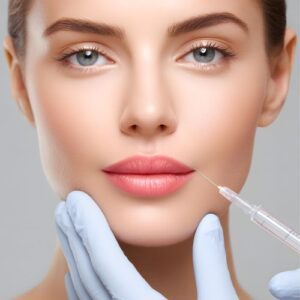 The patient who arrives having been treated several times by a previous practitioner is one of the most common scenarios in any established aesthetic practice, and the work in front of you is fundamentally different from a first-time treatment. You are not designing a lip from a blank canvas. You are inheriting a set of decisions someone else made, often a stock treatment applied to each patient without much customisation, and the aesthetic problem you have to solve is whatever the cumulative effect of those decisions has produced in this individual’s face. Lateral lip dominance is one of the most frequent presentations in this kind of inherited case, and the corrective work depends on understanding why lateral fullness downgrades the appearance and how to rebuild the dominance hierarchy that actually beautifies the lip.
The principle to hold in mind throughout this kind of treatment is that the middle third of the lip should dominate the lateral, in the same way that a strong chin dominates the jowls in a well-balanced lower face. That dominance pattern is what produces a lifted and positive aesthetic. When the lateral lip ends up carrying more visual weight than the middle, the lip reads as sad or negative around the oral aspect, and no amount of additional volume in the wrong place fixes that. The corrective work involves blending down the lateral dominance, supporting the structures around it, and then concentrating the volume in the middle third where the patient’s natural beauty actually lives.
A patient who has had stock lip treatment delivered laterally across multiple appointments tends to develop a particular presentation, with the lateral lip more visually dominant than it ought to be and the surrounding structures pulled into a downward-reading configuration. Whether the lateral fullness is the result of repeated direct treatment in that area or migration of product from earlier injections, the aesthetic effect on the face is the same. The lateral oral aspect carries a sense of sadness or negativity that the patient may not be able to articulate but is reading on every face she encounters.
A small shadow sitting beside the dominant lateral lip is often part of the complex that allows the lateral to rotate outward and present so prominently. Volume loss in that adjacent area effectively gives the lateral lip a stage to dominate from, and treating the small volume loss can support the lateral structure and reduce its visual dominance without needing to dissolve any of the existing filler. Even where the treatment does not mechanically rotate the lateral lip back into a better position, decreasing the boundary that defines its dominance does visual work, making the lateral lip read as less dominant in the face overall.
The unusual element of this kind of corrective treatment is that some of the work happens in places you would not normally inject during a primary lip treatment. Injecting underneath the lip and into the white of the lip is uncommon in standard lip enhancement, but in the context of supporting the lower lip and blending in inherited lateral fullness, it serves a clear purpose. The aim is to support the structure of the lower lip so it can carry more of the visual weight, which contributes to shifting the dominance hierarchy back toward the middle third.
A small bend introduced to the needle helps reach these less standard positions while following the natural curvature of the surrounding tissue. The needle modification serves the same purpose here as in any other vertical or curved lip work, allowing the practitioner to follow the arc of the anatomy rather than fighting it with a straight instrument, which produces a cleaner injection with less trauma along the pass.
Inherited cases often present with subtle asymmetries that become useful clues during treatment planning. A lip that looks fuller on the left than the right gives you a target to work toward, with the better-looking side acting as the reference for what the under-treated side should look like. Treating the under-projected tubercle to bring the right side closer to the left produces the curvaceous symmetry that makes lips read as beautiful, and the same correction often delivers benefit beyond the obvious target.
Lower lip projection that is genuinely brought outward has a knock-on effect on the upper lip, because the upper lip is usually already well projected in these cases and the disharmony comes from the lower lip not matching it. Bringing the lower lip out into a properly projecting position restores the harmony between the two, which produces a more balanced result than treating the upper lip again could ever achieve. The angle of the lower lip ideally runs from the philtrum down to a point on the chin, and that diagonal is the line the corrective injection is trying to recreate.
Visualising the lip from the side rather than only from the front gives you the diagonal line that defines correct lower lip projection. The line should drop from the philtrum down to an angle on the chin, and the aesthetic deficit in many inherited lateral-dominant cases is that the lower lip is not far enough forward to complete that diagonal. The visible line of where it should sit becomes the treatment target, and the injection is calibrated to produce exactly that position rather than chasing a generic volume increase.
This kind of profile-based planning matters more in corrective work than in primary lip enhancement, because the patient has already received volume in places that may be working against the final shape, and a fresh planning lens is needed to override the visual habit of just adding more to what is already there.
Two boluses placed on top of each other in the same target area is one of the techniques used to build the projection you want, with the products spreading slightly after injection in ways that need active shaping to control. The key shaping element comes from bringing the filler up into position through external manipulation rather than relying on it to settle into the right place on its own. The injection alone places the product in the general zone. The shaping is what makes it sit in the precise position the treatment plan calls for.
Small bleeding during the work is a routine part of needle injection and gets controlled with light pressure before continuing. The interruption to address the bleed is a moment of pause rather than a setback, and the work resumes as soon as the surface is dry enough to keep clean focus on the next pass.
The connective tissue of the lip is what holds the product in shape after injection, and the relationship between the injection and the final shape is not as direct as it might appear. Sometimes filler is placed correctly and seems to do nothing visible immediately afterward, and only the shaping squeeze brings the product into the position where it actually delivers the aesthetic effect.
The principle is that filler will settle into low-pressure points within the lip if left to find its own path, and those low-pressure points are not always exactly where the aesthetic plan needs the volume to sit. Squeezing the product into the correct position after injection is what produces the shape you actually planned, and it removes the variability that comes from letting the product migrate to wherever the tissue resistance happens to be lowest. In corrective work where the existing tissue already carries the imprint of previous injections, this shaping discipline becomes even more important because the natural flow paths inside the lip have been altered by the prior treatments.
Treating patients who have received many previous treatments elsewhere is genuinely harder than treating a fresh case, and the difficulty does not always show up in a single appointment. The lip carries the cumulative architecture of every previous decision, the surrounding tissue has been remodelled by repeated injection, and the patient herself has often acclimatised to the lateral dominance that downgrades her face. Working back toward a middle-third dominance hierarchy can take more than one session, with each appointment producing an incremental improvement rather than a complete reset.
The aesthetic philosophy that holds this kind of work together is the principle of dominance running through the face. Just as a strong chin dominates the jowls in a well-balanced lower face, the middle third of the lip needs to dominate the lateral to produce a lifted and positive read. When inherited treatment has reversed that hierarchy, the corrective sequence is patient blending of the lateral, supportive treatment of the adjacent volume losses that allow the lateral to rotate outward, and concentrated work in the middle third where the dominance needs to be rebuilt. The work is slow, it is rarely complete in a single visit, and there is a great deal to learn about the battles a practitioner goes through with this kind of case.
Join us for one of Dr Tim's FREE upcoming webinars. Check dates here and save your spot
FREE Complications Webinar
Want to overcome your fear of complications and confidently master anatomy?
If you want to increase your knowledge about safe and effective lip filler injectable treatments, Dr Tim Pearce offers a series of fabulous courses, from foundation and upwards:
In addition, browse our FREE downloadable resources.
Dr Tim Pearce MBChB BSc (Hons) MRCGP founded his eLearning concept in 2016 in order to provide readily accessible BOTOX® and dermal filler online courses for fellow Medical Aesthetics practitioners. His objective was to raise standards within the industry – a principle which remains just as relevant today.
Our exclusive video-led courses are designed to build confidence, knowledge and technique at every stage, working from foundation level to advanced treatments and management of complications.
Thousands of delegates have benefited from the courses and we’re highly rated on Trustpilot. For more information or to discuss which course is right for you, please get in touch with our friendly team.