

![Upper Facial Muscle Balance: Frontalis & Brow Depressors <br>[Asymmetry Series: Part 2A]](https://drtimpearce.com/wp-content/uploads/2026/01/Jude-Harford-Nurse-Practitioner.jpg)


FREE Complications Webinar
Want to overcome your fear of complications and confidently master anatomy?
Join us for one of Dr Tim's FREE upcoming webinars.
Check dates here and save your spot
 Dr Tim Pearce
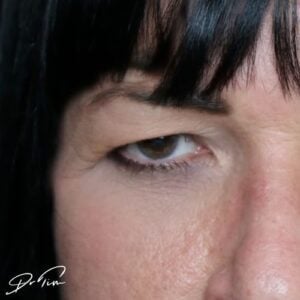 The majority of cases reported as eyelid ptosis on aesthetic forums are actually eyebrow ptosis, which means patients are getting the wrong treatment and injectors are repeating the same diagnostic mistakes without realising it. This misidentification creates a cycle where practitioners blame themselves for complications they may not have caused, and patients receive corrections that fail to address the real problem. Getting comfortable with eyelid ptosis starts with understanding what you’re actually looking at, and then knowing what to do about it.
An eyelid ptosis is a droopy eyelid, and it becomes clinically significant when it’s a new symptom, when it’s asymmetrical, or when it affects vision. The critical point that trips up newer injectors is that we’re assessing the eyelid position with reference to the pupil, and specifically not the eyebrow or the skin above the eyebrow. Once you anchor your assessment to the right landmark, the diagnostic picture changes considerably.
A lot of injectors assume responsibility for any side effects, symptoms, or complaints that appear after botulinum toxin treatment, and patients also reasonably connect what they see to procedures they’ve recently had done. There are actually many causes of asymmetry around the eye that have nothing to do with botulinum toxin, and you should rule these out before concluding you’ve caused a complication.
Congenital ptosis is more common than most practitioners realise. It’s usually mild and asymmetrical, present from birth, but it often becomes more noticeable with age. Think about Jeff Bezos, who has a visible asymmetry, or consider that many injectors only notice their own mild lid asymmetries once they start working in aesthetics. The advice here is straightforward: always check your before photos. Patients commonly spot existing facial features for the first time after a new procedure because they suddenly analyse themselves in much more detail, and this is most often the case with mild ptosis that was already present.
The most common way injectors get confused is with brow ptosis, particularly on patients whose forehead skin runs uninterrupted down to the eyelid. When the frontalis muscle drops after botulinum toxin treatment, the forehead tissue slumps and can transmit energy into the upper lid area. What you need to look for on examination is the relationship between the eyebrow and the lid line. A brow ptosis usually narrows this space much more than it actually drops the lid itself, and this distinction matters enormously because the treatment for a drooping eyelid is very different to the treatment for a drooping brow.
There are several medical conditions that can present in ways that look almost identical to a botulinum toxin side effect, and you would not want to miss them.
Myasthenia Gravis is caused by autoimmune destruction of the acetylcholine receptor. Because the disease affects areas proportional to their activity level, the eyelid often droops early in the disease course. This can be asymmetrical, presenting in a way that closely mirrors what you’d expect from a botulinum toxin complication.
Horner’s Syndrome is another condition worth knowing about. It causes ptosis through disruption of the sympathetic nerve innervation of the face, which can happen for various reasons. The most serious cause is an apical lung cancer affecting the sympathetic nerve plexus in the chest, and it produces additional signs beyond the droopy eye including sweating abnormalities and constriction of the pupil. Confusing this with a cosmetic treatment side effect could delay a potentially life-saving diagnosis.
The commonly cited risk of eyelid ptosis from botulinum toxin is around one in 100 treatments, though in experienced hands the incidence is far lower than that. When it does occur, the mechanism involves botulinum toxin making its way into the orbit and affecting the levator palpebrae muscle.
The levator palpebrae is the primary muscle of eyelid elevation. It runs from its origin on the lesser wing of the sphenoid bone, over the top of the globe and over the superior rectus muscle, until it fans out and becomes a tendon sheath called the levator aponeurosis. This aponeurosis passes over the Whitnall’s Ligament, a transverse suspensory ligament that acts as part of a pulley system, converting the horizontal pull of the levator muscle into a more vertical force that actually lifts the eyelid.
Behind the levator aponeurosis sits the superior tarsal muscle, also called Muller’s Muscle. This is a smooth muscle that also elevates the eyelid but operates outside conscious control, responding instead to the sympathetic nervous system during acute stress or excitement. Understanding the distinction between these two muscles is directly relevant to treatment, because while the levator palpebrae is affected by botulinum toxin diffusion, Muller’s Muscle responds to a completely different set of pharmacological interventions.
Once you’ve ruled out medical causes and confirmed you’re dealing with a genuine eyelid ptosis, there are several treatment options worth knowing about, even if you don’t offer all of them in your practice.
For botulinum toxin-induced ptosis or mild congenital ptosis, medications that stimulate Muller’s Muscle can provide temporary relief. Drugs like apraclonidine and oxymetazoline hydrochloride mimic the sympathetic fight-or-flight response, which naturally causes widening of the eye. These medications can temporarily lift the eyelid for four to six hours at a time. In the UK, these medications are off-label, though a licensed product called Upneeq is available in the US. The relief is temporary, and they won’t suit every patient, but they offer an immediate option while other approaches take effect.
The second option surprises many patients: you can treat an eyelid ptosis, even one caused by botulinum toxin, with more botulinum toxin injections. The eyelid has muscles that oppose each other. The retractors (tarsal muscle and levator palpebrae) are opposed by the palpebral part of orbicularis oculi, the protractors. Injecting one to three units of botulinum toxin into the upper eyelid orbicularis oculi muscle, anterior to the tarsal muscle, can lift a drooping eyelid by about a millimetre. Many injectors managing this complication will combine both approaches: drops work within minutes but require constant reapplication, while the additional toxin takes a couple of weeks to produce results but then provides consistent correction.
Surgical options are relevant for patients with congenital asymmetries or age-related ptosis that has progressed to the point of affecting function. Ptosis surgery is distinct from a standard blepharoplasty and requires an oculoplastic surgeon who operates on the eyelid itself.
There are two main surgical approaches. The first targets the levator aponeurosis tendon, shortening it by the required amount to create a lift. This type of surgery tends to be reserved for older patients with functional problems from severe lid drooping that obstructs vision, though it is less likely to deliver a perfect cosmetic result. The second approach is less powerful but more aesthetically predictable, involving removal of a section of the tarsal muscle through the posterior side of the lid to create a more controlled cosmetic outcome.
The most important takeaway from understanding eyelid ptosis is the discipline of getting your diagnosis right before starting any treatment. If a patient comes back with mild ptosis, resist the impulse to leap straight into a correction. Consider congenital asymmetry by reviewing your before photos. Differentiate between eyelid and eyebrow ptosis by examining the lid position relative to the pupil. Rule out medical conditions like Myasthenia Gravis and Horner’s Syndrome before attributing symptoms to your treatment. Starting a treatment that doesn’t address the actual problem is frustrating enough, but missing a coincidental medical condition behind an assumed cosmetic complication carries consequences on an entirely different scale.
Want to overcome your fear of complications, confidently master anatomy and 10x your injection skills? Join us for one of Dr Tim’s FREE upcoming webinars. Check dates here and save your spot >
Join us for one of Dr Tim's FREE upcoming webinars.
Check dates here and save your spot
Dr Tim Pearce MBChB BSc (Hons) MRCGP founded his eLearning concept in 2016 in order to provide readily accessible BOTOX® and dermal filler online courses for fellow Medical Aesthetics practitioners. His objective was to raise standards within the industry – a principle which remains just as relevant today.
Our exclusive video-led courses are designed to build confidence, knowledge and technique at every stage, working from foundation level to advanced treatments and management of complications.
Thousands of delegates have benefited from the courses and we’re highly rated on Trustpilot. For more information or to discuss which course is right for you, please get in touch with our friendly team.


![Upper Facial Muscle Balance: Frontalis & Brow Depressors <br>[Asymmetry Series: Part 2A]](https://drtimpearce.com/wp-content/uploads/2026/01/Jude-Harford-Nurse-Practitioner-405x260.jpg)