You may be interested




 Dr Tim Pearce
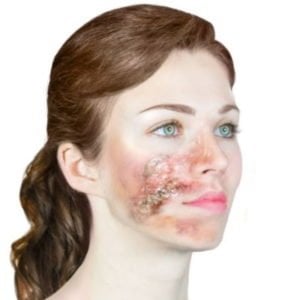
For many aesthetic clinicians, the scenario that makes them break out into a sweat is envisaging a vascular occlusion that leads to necrosis, combined with an angry patient who knows you could have done more – it is the stuff of nightmares, but no need to panic; Dr Tim Pearce is here to show you how to avoid this definitely-avoidable-situation.
In this blog, the first of two, Dr Tim will give you the insight that you need to stop being constantly afraid of causing vascular occlusions, allowing you to move forward and build your practice, giving you the skills to avoid and control the chances of this complication. He has hand-picked some of the common questions he receives on the topic.
Do you feel anxious about causing complications? Many clinicians feel so overwhelmed with the thought of causing a vascular occlusion that it stops them growing their aesthetics business. Dr Tim is currently hosting a webinar series to help you overcome your fear of complications so that you can uplevel your knowledge, and increase your CPD-certified learning to build a successful aesthetics business. Sign up here >>
Which needle size is the safest to reduce the risk of a vascular occlusion?
You can cause a vascular occlusion with any size instrument (needle or cannula), notes Dr Tim. However, the larger the instrument, the fewer vessels it can fit into; this mainly applies when using cannulas for injection. If you use a bigger cannula, you will likely reduce the risk of getting into many of the smaller vessels.
With needles, however, he does not believe it will make much difference because most of the named arteries are much wider than the width or gauge of a typical needle used for dermal fillers, which is approximately 0.1mm; hence all the needles we use will likely fit inside all named vessels.
By choosing a smaller needle you may still fit inside some of the slightly smaller vessels, but beyond a certain size, it becomes much harder to push a lot of dermal filler into a very small vessel, hence there is a limit to how much a vessel will take due to resistance, as explained with Poiseuille’s law.
Dr Tim suspects that most of the large vascular occlusions happen in larger, rather than very tiny vessels, therefore he suggests that it will not make a big difference to your risk profile if you use a 31-gauge instead of a 27-gauge needle, even though in theory you could fit that needle into some smaller vessels, it is unlikely to cause large vascular occlusions.
Is the pain from a vascular occlusion near the injection site?
This is highly variable, and Dr Tim helps to explain why based on understanding how far filler might travel when you are injecting, depending on how you inject away from the injection site. If all the product is in a vessel and you have injected quite a lot – bearing in mind that the amount of filler product required to block an artery, such as the superior labial artery is very small, at approximately 0.05ml – it might travel quite some distance in the artery and cause pain much higher up from the injection site.
The other component to consider is what is causing the pain, it could be filler in the artery, or it could be the pressure, or even a spasm within the vessel caused by the trauma which triggers pain in a different position, or it could be the nerves associated with that vessel. The pain could be anywhere, thus Dr Tim advises considering pain as a global indication of the risk of a vascular compromise, whereupon you can assess the area in more detail to try to establish a direct location for a lack of blood flow.
Can you always rely on the capillary refill time (CRT) to diagnose a vascular occlusion?
This question stems from an aesthetic clinician who experienced a haematoma in their patient and realised that they could not rely on capillary refill time (CRT), which is correct. Dr Tim explained that this is because a haematoma increases the pressure in the skin which decreases CRT, making it more difficult to assess whether you have a restriction in blood flow.
 He advises that you take some time to understand how CRT works in different scenarios, allowing yourself to review and assess CRT throughout an entire procedure, even whilst a haematoma is developing, so you can see what it does over time. Make sure the patient leaves you with a normal CRT.
The moment you see a small gush of blood, immediately compress the area, and do not lift your finger for at least a minute because this might be one of the few times you can assess CRT without blood blocking your view. Hold it for the first minute to try and give the vessels a chance to compress and for the bleeding to stop. As soon as you think that it may have clotted, lift, and look very closely to assess the refill time. If it is normal, it is worth holding it again for another 30 seconds. If the bleed was significant, remember to mark down in your notes that your patient had a normal CRT immediately after injection. Assess the area multiple times and note your findings, including all the time when the CRT was normal.
With haematomas, it is later, at the 6-, 12- or 24-hour point where there is a delay in capillary refill, especially with a large haematoma.
With your documented history of normal CRT immediately after the procedure, it is much easier to determine that it is just a haematoma versus a vascular occlusion because you have data that suggests blood flow was normal after the procedure. After 24 hours, a haematoma should not be painful, it will be tender when you push it, but it should not be causing a burning, aching, painful sensation which you would expect with a developing necrotic injury.
Can we avoid a necrotic injury with simple measures like massage and warm compress, without needing hyaluronidase?
Dr Tim believes this is potentially possible with a very low viscosity HA filler product. If, for example, you could massage it to create enough space in the vessels, by moving it through them, that you could restore some blood flow, but this is a very theoretical answer.
He cautions that he would reserve that approach for situations where you have no other option and would never recommend that as the first course of action when hyaluronidase is available, and the filler is hyaluronic acid based.
Have a read of another great blog from Dr Tim, vascular occlusion, how much hyaluronidase?
How good an indicator is temperature to diagnose a vascular occlusion?
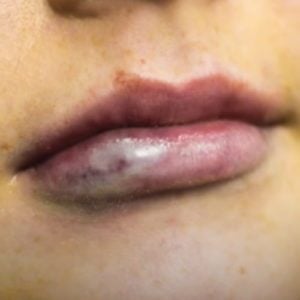 Clinicians have asked if a vascular occlusion will always be cold or can it be warm. Dr Tim thinks that temperature is a poor indicator in the early stages of a vascular occlusion, and the best indicator is capillary refill time. However, as time goes on, it might become easier to use temperature as a gauge, but most obviously in very large vascular occlusions where you will not be struggling to detect the problem.
Detecting a small vascular occlusion using temperature is not going to be easy. You will find it difficult to determine a different temperature to the surrounding tissue because there is usually enough blood flow, through the deeper vessels, to note warmth. Dr Tim would not use temperature as an indicator when diagnosing a vascular occlusion.
How long does it take from vascular occlusion to skin necrosis?
This has been studied in many ways including animal models which unfortunately have a very different metabolism to humans, but also in humans who have lost limbs and tissue viability was measured. The consensus is that around the 8 hour point you can no longer reverse necrotic injury.
The problem with vascular occlusion is that they are seldom 100%, like a severed finger, they tend to be partial and there are collaterals that supply the tissue. Therefore, there may be instances where it is worth being relatively aggressive with a reversal even 24 or 36 hours post treatment to dissolve the product and encourage the natural healing process, rather than determining it as too late as the tissue is beyond survival.
However, your maximum chance of avoiding a necrotic injury following a vascular occlusion is within the first 8 hours, preferably the first 2 hours, but even if you have missed that window, you can still add benefit to your patient.
Take home messages to make you safer
- You are in control of a lot of the risk of causing a vascular occlusion when you inject, with the techniques that you use to ensure that if one does occur, it is small.
- Ensure you diagnose vascular occlusion immediately, rather than 24 hours later.
- Be prepared to treat and reverse vascular occlusion.
- Treat holistically, do not just dissolve the area where you injected, but make sure you have mapped out the area for a thorough reversal.
- Have a network arrangement with other local aesthetic clinicians so that if you have a large vascular occlusion, you can call on them for support and perhaps extra hyaluronidase.
- Educate yourself on managing complications and use systemic approaches to safety and you will have a very low risk of vascular occlusion.
If you have any further questions or comments about vascular occlusions and necrosis, you can find Dr Tim Pearce on Instagram.
Is your worst nightmare causing a VO?
If you want to be a great injector then you need to get over your fear of complications. Register here for the next webinar to help you overcome your complications anxiety >>
Subscribe to our YouTube channel for really useful regular tips and advice. 
Aesthetics Mastery Show
Vascular Occlusion & Necrosis Prevention | Dermal Filler Safety Advice for Injectors
In this episode, Dr Tim talks about the nightmare scenario where a vascular occlusion is heading towards necrosis. He shares his tried and tested advice for preventing a dreaded VO. Watch the full Aesthetics Mastery Show here.
Read more and join in the debate on our YouTube channel.
Filler Complications eLearning Courses
If you want to increase your confidence by learning how to handle complications, Dr Tim Pearce offers two comprehensive courses that are highly rated by our delegates:
Both give CPD and certificates on completion.
In addition, browse our FREE downloadable resources on complications.
Dr Tim Pearce eLearning
Dr Tim Pearce MBChB BSc (Hons) MRCGP founded his eLearning concept in 2016 in order to provide readily accessible BOTOX® and dermal filler online courses for fellow Medical Aesthetics practitioners. His objective was to raise standards within the industry – a principle which remains just as relevant today.
Our exclusive video-led courses are designed to build confidence, knowledge and technique at every stage, working from foundation level to advanced treatments and management of complications.
Thousands of delegates have benefited from the courses and we’re highly rated on Trustpilot. For more information or to discuss which course is right for you, please get in touch with our friendly team.