


Note:
This article was written by a guest contributor from our community. The views and clinical opinions expressed here belong to the author and do not necessarily reflect the opinions or endorsements of Dr Tim Ltd.
 Dr Tim Pearce
 MD
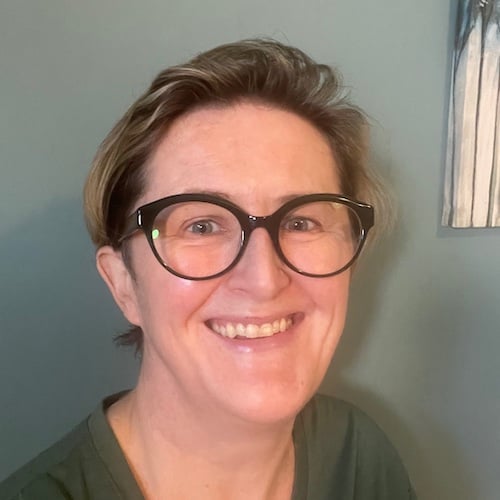
Dr. Dima Maraqa is a dentist and aesthetic practitioner based in Amman, Jordan, specializing in non-surgical facial aesthetics since 2016. She has a strong passion for the science and technology behind every procedure she performs. She believes that true beauty starts with knowledge, precision, and evidence-based techniques. Her approach focuses on achieving natural, safe, and long-lasting results for every patient.
https://www.instagram.com/dimamaraqa
For a long time, I thought clinical growth meant learning more techniques.
Like many clinicians, I moved from course to course searching for better outcomes — better smiles, smoother skin, improved profiles, more refined treatment plans. And while technical education absolutely matters, I eventually realised that the biggest shift in my practice did not come from a new injectable technique or a different product.
It came from learning to see tissue differently.
As clinicians, we are often trained to identify isolated problems and match them to isolated treatments. A fold is filled. A wrinkle is softened. A tooth is restored. A volume deficit is replaced.
But over time, I began noticing that many aesthetic concerns were not truly isolated at all.
Some patients dissolved filler quickly despite technically correct treatment. Others developed heaviness after repeated volumisation. Some continued to look tired despite having “enough” volume. In dentistry, I noticed how tooth wear, occlusal collapse, reduced lower facial support, and muscular compensation could influence not only function, but the entire way the lower face aged and expressed itself.
The more I observed these patterns, the more I realised that tissue behaviour often tells a deeper story than surface anatomy alone.
It is a gradual change in the way tissues communicate, repair, support, and respond over time. Bone remodels. Fat compartments shift. Ligaments weaken. Skin quality changes. Muscle dynamics adapt. Chronic inflammation may influence collagen behaviour and tissue resilience. Even emotional stress, lifestyle, sleep, and systemic health can subtly appear in the face long before patients recognise it themselves.
Once I started seeing aging through this biological lens, my treatment planning began to change significantly.
Instead of asking:
“What product should I use here?”
I found myself asking:
“What is driving this pattern?”
“What is this tissue capable of?”
“Is this patient lacking support, quality, movement balance, or structural stability?”
“Will adding volume actually improve this face long term, or simply camouflage the issue temporarily?”
Those questions completely changed the way I approached consultations.
I became more cautious about overcorrection and more interested in tissue quality, movement, integration, and long-term behaviour. Sometimes the best plan was not doing more treatment, but sequencing treatment differently, improving skin quality first, restoring support gradually, or simply recognising the biological limitations of certain tissues.
The more I understood tissue behaviour, the more I realised that successful treatment plans are rarely built around a single procedure. Meaningful outcomes often come from understanding how multiple structures interact over time.
A patient with lower facial collapse may also have muscular compensation patterns influencing expression and jaw tension. A patient requesting midface volume may actually be presenting with skin quality changes, ligament laxity, or structural imbalance that volume alone may not fully address. In some cases, improving tissue quality, movement balance, or overall facial support may create more harmonious outcomes than aggressively correcting isolated areas.
That shift encouraged me to think less procedurally and more biologically.
Interestingly, this change often improved patient trust and outcomes more than any single technique I learned.
Patients may not always understand anatomy or product rheology, but they do recognise thoughtful assessment. They feel the difference when a clinician is observing the entire face rather than chasing isolated imperfections.
Over time, I realised that sustainable clinical growth is deeply connected to pattern recognition.
The more we understand tissue behaviour, the more precise and conservative our decisions often become. We stop treating every patient with the same formula. We begin adapting treatment plans to biology, aging patterns, movement, tissue resilience, and long-term facial harmony.
In many ways, true growth in aesthetics may come from moving beyond procedural thinking and developing biological thinking.
That transition changed my practice profoundly.
It also changed the way I learned.
I became less focused on collecting techniques and more focused on understanding why tissues behave differently between patients. I started paying closer attention to inflammation, extracellular matrix integrity, structural aging, facial biomechanics, and how dentistry, skin quality, muscle activity, and injectables influence one another as part of a larger system.
Interestingly, some of the biggest changes were not immediately visible in the treatments themselves, but in the overall direction of my practice.
Consultations became calmer and more collaborative. Patients often felt more comfortable discussing long-term concerns rather than requesting quick corrections. Treatment plans became more individualised, more conservative in some cases, and ultimately more sustainable.
I also found that clinical confidence changed when treatment decisions were guided less by trends and more by understanding. There is a different kind of confidence that comes from recognising when to treat, when to wait, and when less may actually create a better long-term outcome.
Over time, this approach strengthened patient trust in ways that marketing alone never could. Patients increasingly value clinicians who observe carefully, communicate honestly, and prioritise long-term facial harmony over temporary aesthetic trends.
– not simply in offering more treatments, but in developing a deeper understanding of the patient, the tissue, and the responsibility that comes with treating both.
Writing and interdisciplinary education also became important parts of this process. Writing forced me to slow down and organise my observations more clearly. It encouraged me to connect evidence with clinical experience and to think more critically about the difference between temporary correction and long-term aesthetic strategy.
Looking back, I now think clinical growth is often misunderstood within our industry.
It is easy to associate growth with visibility, productivity, or mastering advanced procedures. But some of the most meaningful growth happens quietly – in the way we observe tissue, assess aging, communicate with patients, and think through treatment decisions.
Techniques remain important. Innovation remains exciting. But today, I see procedures differently than I once did.
A procedure is rarely the treatment plan.
It is only one part of a much larger biological conversation.
And perhaps that is what clinical growth has ultimately come to mean for me:
Not simply learning how to treat better – but learning how to understand better.
This article was written by a guest contributor from our community. The views and clinical opinions expressed here belong to the author and do not necessarily reflect the opinions or endorsements of Dr Tim Ltd.
Dr Tim Pearce MBChB BSc (Hons) MRCGP founded his eLearning concept in 2016 in order to provide readily accessible BOTOX® and dermal filler online courses for fellow Medical Aesthetics practitioners. His objective was to raise standards within the industry – a principle which remains just as relevant today.
Our exclusive video-led courses are designed to build confidence, knowledge and technique at every stage, working from foundation level to advanced treatments and management of complications.
Thousands of delegates have benefited from the courses and we’re highly rated on Trustpilot. For more information or to discuss which course is right for you, please get in touch with our friendly team.