




FREE Complications Webinar
Want to overcome your fear of complications and confidently master anatomy?
Join us for one of Dr Tim's FREE upcoming webinars.
Check dates here and save your spot
 Dr Tim Pearce
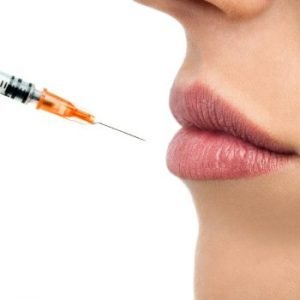
What sets these dangerous injection areas apart from other high-risk zones is that for aesthetic reasons your needle is often parallel with the blood vessel, and the biggest factor is that when the needle is parallel to an artery the chance of cannulating that vessel is much higher because you’ve got vastly more ability to get all the way into the vessel which means when you inject all of your product flows into that area and you cause a much bigger occlusion.
Top of the list has to be the most common place to cause an occlusion probably due to the frequency of procedures which is lip augmentation, where the superior and inferior labial arteries both run parallel with the lips and many injection techniques teach you to inject in a way that’s parallel with the vermilion border which means you’re constantly putting your needle repeatedly parallel with the artery. One of the pros of some of the tenting or Russian lip techniques where you’re running at 90 degrees is that at least you’re not parallel with a vessel and although many will say that bruising is much worse you’re less likely to actually fill a blood vessel with dermal filler, and being aware of your depth is really critical where having one occlusion in 12 years means rates can be really good and that’s primarily due to getting the depth correct since the artery tends to run just beneath the muscle in most people.
You want to be superficial with a good quality product because if you’re using a very thick product you can’t really be that superficial since you’re often hiding relatively poor products underneath the tissue, but with a good quality soft product you can be very superficial on the lips because it will blend in really well. You want to do a depth check where when you lift that needle up you should see the skin blanch along the surface and when you rest it back down with zero force across it you should see no blanching, where if you get blanching at rest you’re above the papillary dermis which means you’re squeezing the blood supply out of the dermis and if you inject there you’ll see the filler.
The dorsal nasal artery when doing rhinoplasty runs along the spine of the nose where once again you’re parallel with your instruments making this a really risky area whether you use cannula or not, and one of the worst occlusions ever seen has been using cannula where it was an occlusion of the dorsal nasal artery. Because you’re parallel and it’s a very tight space cannulas are believed to be a bit more risky because as you’re trying to edge your way up you have to put a reasonable amount of force on it, and if you pop into a blood vessel you tend to stay in that position and you’re trying to add volume and when you’re adding a lot in one place the size of the occlusion gets so much worse and it’s way more likely when you’re parallel.
Many people think needles are more risky though needles will increase the frequency of occlusion but decrease the severity of the occlusion which makes it really hard to decide which to use, and blindness is one of the side effects of injecting this artery with enough product to fill back down the supratrochlear artery and block the retinal artery. You could use techniques that are less likely to be parallel where even just going at 90 degrees straight in and touching the periosteum you’re less likely to cannulate an artery than running parallel with it, and touching the periosteum with the bevel pointing down is probably safer than at the intermediate level parallel with the arteries which is probably the riskiest way to do it.
Either side of the nose works well because mostly the dorsal nasal artery exists as two of them running slightly either side of the midline so being on the midline will make you safer in that area, and small amounts at a time along with blocking the supratrochlear artery when you’re injecting can make it safer where you block it with your finger while injecting though obviously you’re not preventing an occlusion but just preventing an occlusion that flows back down the supratrochlear artery and causes blindness.
The facial artery along the nasolabial fold creates risk because we’re often injecting parallel whether you’re using cannula or needle where the artery runs usually just lateral to the nasolabial fold, and this is a bit more common apparently in Chinese faces because they tend to have the artery in the nasolabial fold more frequently which makes it even more crucial to be aware of it since if you block this blood vessel it’s a major problem because it’s the main blood supply to the face. Depth is probably the most important thing where many will advocate for a deep periosteal injection because there’s quite a lot of fat in this area and mostly the artery runs in the nasolabial fat pad which means if you’re deep and on the periosteum you’re unlikely to be in the blood vessel, though the other end of the spectrum is you inject so superficially that you know you’re not in the fat which means you’re in the dermis.
If the artery was at that superficial level you’d feel it really easily just by putting your hand on it which is one more thing you might do, and particularly when training clinicians who start to actually look for these for teaching purposes you’ll find it palpable in maybe a third of your patients where you can actually feel at least some of the artery and that will help guide you where not to inject.
The supratrochlear artery is parallel with some injections where we need to be careful of it higher up because it does get more superficial as it goes up the forehead though it’s still particularly risky because most of the vessels are still running parallel with the needle that you might be putting in if you’re treating a frown line. You need to be making sure that you’re at the right depth where this vessel is quite superficial and the higher up you go from its entry point the more superficial it gets so you’re trying to be as superficial as you can, and you’re trying to use small amounts of product at a time while obviously aspirating and pointing the needle upwards rather than down if you can along with blocking the artery with your finger while injecting and using products you know aspirate well while trying to keep the total volume to a minimum.
The submental artery when treating jawlines creates risk if you’re running a needle parallel to the jawline just usually on the inferior side of the mandible where you can often feel this artery, and there have been cases where Roger Aston aspirated on stage and got a bright red aspirate which makes sense because you’re parallel with the artery. You want to be gentle with a cannula and use analog tests checking if the cannula is mobile or if it feels tethered, and testing on a cadaver showed that if you put a cannula into a vessel and try to move it it feels quite tethered whereas when you’re in the fat they move quite easily so that’s your guide that it’s an easily movable instrument.
A lot of mobility with the cannula makes it less likely that you’re going to put a lot into one place because even if you were in at one point you’re probably moving it in and out quite a lot so moving it decreases the risk.
Lower viscosity products flow more easily through smaller vessels where if you’re using a product like Juvederm Volbella with a 31 gauge needle it’s likely to flow more easily into those vessels if you were to cannulate one, so you’re a bit more likely to cause a significant occlusion with a low viscosity product where you’re injecting in high-risk areas though that’s not to say they’re dangerous or that you should always use thicker higher G prime products since it’s just a principle around what’s most likely to flow deeper into the vasculature and it’s low viscosity products that have this characteristic.
Join us for one of Dr Tim's FREE upcoming webinars.
Check dates here and save your spot
If you want to increase your knowledge about safe and effective lip filler injectable treatments, Dr Tim Pearce offers a series of fabulous courses, from foundation and upwards:
In addition, browse our FREE downloadable resources.
Dr Tim Pearce MBChB BSc (Hons) MRCGP founded his eLearning concept in 2016 in order to provide readily accessible BOTOX® and dermal filler online courses for fellow Medical Aesthetics practitioners. His objective was to raise standards within the industry – a principle which remains just as relevant today.
Our exclusive video-led courses are designed to build confidence, knowledge and technique at every stage, working from foundation level to advanced treatments and management of complications.
Thousands of delegates have benefited from the courses and we’re highly rated on Trustpilot. For more information or to discuss which course is right for you, please get in touch with our friendly team.