

• Mail us: support@drtimpearce.com
  • Trustpilot
Dr Tim Pearce, eLearningDr Tim Pearce, eLearningDr Tim Pearce, eLearning Dr Tim Pearce, eLearning
  • eLearning Courses
        • ELEARNING COURSES

        • Techniques
          • BOTOX® Foundation Course
          • Pro Tox
          • Dermal Fillers Foundation Course
          • 8D Lip Design
          • Julie Horne Directs, Dr Tim Injects – February 2023
          • Eyelash Enhancement Serum Course
          • Anatomy360
          • Art Codes
        • Complications
          • Botulinum Toxin Complications Mastery
          • Dermal Filler Complications Mastery
          • Elective Lip Reversal
        • Profinity
        • Wellness
          • How To Introduce Longevity To Your Aesthetics Clinic
        • Marketing
          • DCAM 2.0
          • Canva Mastery: A Step-by-Step Guide
          • Email Marketing Course
          • Industry Photography Secrets
          • How to find your voice with video
        • Other Services
          • DPP for V300 Service
        • Packages
          • Foundation eLearning Package – SAVE 10%
          • Complications eLearning Package – SAVE 10%
          • Techniques eLearning Package – SAVE 20%
          • Marketing eLearning Package – SAVE 20%
          • Full eLearning Package – SAVE 35%
        • Reviews and Testimonials
        • FAQ – Online Courses
  • Downloads
        • Complications
          • 13 Extra Risky Injection Areas: Facial Vessel Map
          • Aspirating Experiment Test Results
          • Bruising Checklist: Prevent & Minimise Bruises from Injectables
          • Dermal Filler Complications: The Essential Guide
          • Delayed Onset Nodules: How To Diagnose And Treat
          • Diagnosing Complications: 7 Steps To Great Advice
          • Emergency Reversal Protocol
          • How To Avoid Causing a Lateral Rectus Palsy From Botulinum Toxins
          • Hyalase Consent Form: Downloadable Template
          • Lumps in Lips Guide: How to Diagnose, Manage & Treat
          • Tear Trough Oedema Protocol
          • Does Covid-19 Vaccine Cause Dermal Filler Reactions?
        • Injection Techniques
          • 26 Essential Injection Patterns For Botulinum Toxin
          • Botox Calculator
          • BOTOX Lesson – Gummy Smile
          • BOTOX Lesson – Hooded Eyes
          • Frequently Used Filler Volumes Facial Map
          • How To Improve Your Needle Control: 6-Step Blueprint
          • How to Prepare BOTOX – Step by Step Guide
        • Consultation Skills
          • Body Dysmorphia & Modification Checklist
          • Is It Safe To Treat? 5-Step Contraindication Check List
          • Medical Model For Cosmetic Procedures: An Essential Guide
        • Lips
          • Lip Consultation Question Checklist
          • Lip Anatomy Lesson
          • Common Needle/Cannula Choices For Lips
          • Lip Filler Aftercare Pack for Your Patients
          • Lip Design Blueprint – 4 Steps To Perfect Lip Augmentation
          • Master the Basics of Julie Horne’s Lip Technique
        • Longevity
          • Does HRT Increase Cancer Risk? Guide for Clinicians
          • Educating Patients About How Sugar Exacerbates Aging
          • How to Reduce Biological Age for Your Patients
        • Business & Marketing
          • Annual Profit Calculator
          • 5 Steps to Create a Successful Aesthetics Business
          • Injector’s Cheat Sheet – 7 Social Media Post Types
          • 7 Deadly Hashtag Sins
          • 7 Secret Locations to get Instagram Followers
          • 9 Video Marketing Mistakes
          • 15 Easy Instagram Reels Ideas
          • 3 Time-Saving Hacks for Social Media
          • Personal Branding Starter Kit
          • Value Audit Template: Price-per-1ml
          • World’s Top 5 Filler Brands – Survey Results
  • Products
    • Artistic Anatomy Poster Collection
    • Top 3 Posters Bundle
    • Original Anatomy Poster
    • Beautiful Lip Anatomy Poster
    • Download Pack – Forms & Leaflets
  • Blog
    • Meet the Writers
  • About
    • Dr Tim Pearce
    • Miranda Pearce
    • Careers & Recruitment
    • Become a Model
  • Contact
  • Login

Login

Periorbital Oedema After Tear Trough Filler: Management Guide

Blogs

  • ALL
  • Complications
  • Injection Techniques
  • Consultation Skills
  • Lips
  • Business & Marketing
You may be interested
Periorbital Oedema After Tear Trough Filler: Management Guide

Periorbital Oedema After Tear Trough Filler: Management Guide

July 16, 2026

Beyond the Skin: How Chronic Stress & Cortisol Impact Aesthetic Treatment Results

Beyond the Skin: How Chronic Stress & Cortisol Impact Aesthetic Treatment Results

July 14, 2026

Facial Anatomy for Injectors: How Muscles, Fat Pads, and Vectors Determine Your Results

Facial Anatomy for Injectors: How Muscles, Fat Pads, and Vectors Determine Your Results

July 9, 2026

The Gut-Skin Axis and Immune-Mediated Skin Inflammation

The Gut-Skin Axis and Immune-Mediated Skin Inflammation

July 7, 2026

Sleep Quality and the Epigenetic Clock: A New Frontier in Aesthetics

Sleep Quality and the Epigenetic Clock: A New Frontier in Aesthetics

July 2, 2026

Periorbital Oedema After Tear Trough Filler: Management GuideDr Tim Pearce
July 16, 2026

Understanding Causes

Tear troughs anatomy

A patient who has just paid for a treatment designed to make them look fresher and instead finds themselves staring at puffiness in the mirror is one of the more distressing scenarios in aesthetic practice, distressing both for the patient losing sleep over their appearance and for the injector trying to work out what has gone wrong and what to do about it. The tear trough is the area where this scenario plays out most often because of the unique anatomy of the region, which makes understanding the diagnostic framework and the staged management approach essential clinical knowledge for anyone working in this part of the face.

Post-procedure oedema can present immediately after treatment or appear two years later, and the management approach is genuinely different in each of those scenarios, so the first job in any consultation about under-eye puffiness is to anchor where on the timeline the patient sits before deciding what to do next.

Why the tear trough area shows oedema so easily

The skin around the tear trough sits at approximately 0.2mm thick, while skin over the cheek measures around 2mm, which means there is roughly a tenfold difference in skin thickness between two regions of the face that sit immediately next to each other. The smallest imperfection in the periorbital area becomes visible because there is no soft tissue covering to hide it, so a small amount of retained fluid produces a clinical picture that looks dramatically worse than the same physiological event would in a thicker area of the face.

This anatomical reality is also useful information to share with patients in consultation because it normalises the experience and gives them an explanation for why the area where they had a procedure looks more reactive than they might have expected, which reduces some of the anxiety that fuels poor decision-making about what to do next. A degree of puffiness in the week following treatment is genuinely a normal recovery process, and bruising in this area essentially guarantees some swelling as part of healing because indurated tissue causes visible lumpiness anywhere on the face, with the thin tear trough skin simply making that lumpiness more apparent than it would be elsewhere.

The timing window that changes the clinical picture

Whether the patient is presenting at day three, two weeks, three months, or two years post-procedure changes both your differential and your treatment options, which is why the diagnostic conversation has to start with timing before moving on to anything else. In the first week, holding off on any heavy-handed intervention is usually the right call because puffiness can still be tracking towards normal resolution, and rushing into massage or reversal while the area is still healing risks creating a problem where there was only ever going to be a brief delay in settling.

Two to four weeks out, things start to look different because tissue that should be settling has had the chance to do so. Three to four months out from the original procedure tends to be harder to resolve in a single appointment because whatever is causing the puffiness has had more time to become established. A patient presenting two years post-treatment with new-onset oedema is a different clinical entity again, often related to the breakdown of older filler which appears to attract more moisture as it degrades.

What is actually causing the puffiness

Setting aside the more obvious complications of allergic reaction (typically presenting with persistent erythema), infection, and bruising, the most common cause of persistent tear trough puffiness is some combination of two mechanisms that are difficult to fully separate in clinical practice. The first is that the filler itself attracts a small amount of moisture, increasing the volume of the treated area beyond what was originally injected. The second is that filler sitting in the tear trough may slow the flow of fluid leaving the area, since lymphatic drainage from the periorbital region passes through the cheek tissue below.

There are lymph nodes seated in this drainage pathway, and adding filler on top of them can plausibly slow how quickly fluid clears from the area. Both theories are hard to prove definitively because the clinical picture they produce looks essentially the same to the eye, but the practical implication is identical regardless of which mechanism dominates in a given patient.

Why discretion is the right starting position

The temptation when a patient is upset about post-procedure puffiness is to act decisively, often by reaching for hyaluronidase to clear the situation entirely. The problem with this approach is that you have not necessarily diagnosed why the puffiness is there in the first place, and you risk dissolving filler that the patient was otherwise happy with for a complication that might have resolved with a less invasive approach.

What patients need at the consultation stage is a clear route out of the problem that gives them certainty, because the distress they are experiencing is partly about not knowing whether the puffiness is going to settle and partly about feeling out of control of their own appearance. Painting a clear picture of the staged plan is therefore as therapeutic as the treatment itself, and it buys you the time to use the lower-risk options before escalating to anything that removes what you have placed.

Clinical Management

The staged plan that gives patients certainty

The first stage of management is a firm, slow massage performed in clinic, which will resolve the puffiness on the day in approximately half of cases. This is not gentle relaxation work and patients should know to expect some discomfort, and the massage is also where the diagnostic information continues to come from because if the patient reports significant tenderness during the procedure, that is a signal of underlying inflammation and a reason to wait one to two weeks before doing anything more invasive.

The technique uses anything slippery, such as arnica gel, applied to the thumbs with the patient’s eyes closed. The direction of pressure is down and out, following the lymphatic drainage pathway that runs from the orbital area towards the cheek where the tissue thickens. The pressure is firm and slow because the goal is to squeeze fluid woven into the tissue down into the thicker cheek area below, and gentle stroking will not achieve that. Three to five minutes per side is the working duration, and the visible response is often immediate as you move into the cheek tissue and watch the puffiness reduce, though a degree of rebound is expected and is the reason for the second stage.

Teaching patients to manage the rebound at home

The same technique the patient has just experienced in clinic is the technique they should be replicating at home, using moisturiser or anything that allows their thumbs to slide without dragging the thin skin. Showing them precisely what you did, in the direction you did it, with the firmness you used, is essential because a vague instruction to massage the area produces inconsistent results.

Of the cases where in-clinic massage does not fully resolve the puffiness on the day, roughly half of those will resolve with consistent home massage over the following two weeks. Booking the patient back for a two-week follow-up appointment is part of the plan because it sets the timeline for when the next escalation will happen if the puffiness has persisted, which gives the patient a clear endpoint to work towards while their own physiology has the chance to do its part.

When hyaluronidase becomes the right call

The cases that have not resolved through massage by the two-week review are the ones where reversal is the appropriate next step, and the practical reassurance for these patients is that hyaluronidase usually produces a visible result within one to two hours of treatment. Patients are often reluctant to go straight to dissolving because they do not want to lose what they have, and the staged approach respects that preference by exhausting the lower-risk options first while giving them a clear plan for what happens if those options do not deliver.

The picture shifts for patients presenting with new puffiness two years after their original treatment, where the more likely explanation is that older filler is breaking down and attracting moisture in the process. There is a clinical example of a patient who had her tear trough treated five years prior and returned with significant under-eye bags that disappeared within minutes of receiving hyaluronidase. That kind of rapid resolution is more typical of older fillers and is one reason that the early massage approach, while always worth trying, has a lower probability of being the sole answer in these delayed presentations.

Certainty as part of the treatment itself

The framework that holds all of this together is the staged plan, where you communicate the route out of the problem to the patient before you start, work through the least invasive option first, and only escalate when each previous step has been given a fair chance to work. Diagnostic information continues to flow throughout the process, particularly during the in-clinic massage where tenderness or its absence shapes what happens next, which means decisions can be refined as you go.

Periorbital oedema after tear trough filler is rarely a single mechanism with a single fix, and the practitioners who get the best outcomes are the ones who slow down and talk their patients through the full plan before reaching for any instrument. The certainty you offer in that consultation is doing therapeutic work in itself, because much of the patient’s distress is about not knowing where this is going, and a clear staged framework changes that experience even before any physical intervention happens.

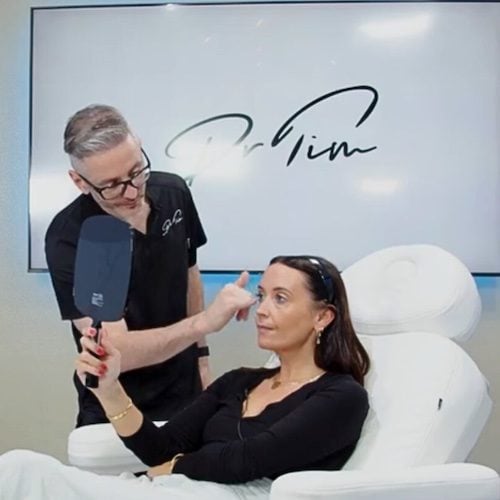
Want to overcome your fear of complications, confidently master anatomy and 10x your injection skills? Join us for one of Dr Tim’s FREE upcoming webinars. 

Ready to master deep fat pad anatomy and transform your consultation approach?

Join Dr. Tim's upcoming webinar where you'll explore the specific locations and volumes of deep fat compartments, understand when to inject deep versus superficial layers, and develop the anatomical communication skills that build patient trust and improve treatment outcomes.

Register for the Free Webinar →

Learn to see facial anatomy the way expert injectors do, enabling treatment plans based on structural understanding rather than surface-level symptom chasing.

Anatomy Webinar
Dr Tim Consultation Anatomy

Dr Tim Pearce eLearning

Dr Tim Pearce MBChB BSc (Hons) MRCGP founded his eLearning concept in 2016 in order to provide readily accessible BOTOX® and dermal filler online courses for fellow Medical Aesthetics practitioners. His objective was to raise standards within the industry – a principle which remains just as relevant today.

Our exclusive video-led courses are designed to build confidence, knowledge and technique at every stage, working from foundation level to advanced treatments and management of complications.

Thousands of delegates have benefited from the courses and we’re highly rated on Trustpilot. For more information or to discuss which course is right for you, please get in touch with our friendly team.

Share This Article
Facebook Twitter Pinterest Linkedin
Prev Post

Related Articles

Beyond the Skin: How Chronic Stress & Cortisol Impact Aesthetic Treatment Results Bestseller

Beyond the Skin: How Chronic Stress & Cortisol Impact Aesthetic Treatment Results

July 14, 2026

Beyond the Skin: How Chronic Stress & Cortisol Impact Aesthetic Treatment Results
By Andrea Callaway
July 14, 2026

Beyond the Skin: How Chronic Stress & Cortisol Impact Aesthetic Treatment Results

READ MORE
Facial Anatomy for Injectors: How Muscles, Fat Pads, and Vectors Determine Your Results Bestseller

Facial Anatomy for Injectors: How Muscles, Fat Pads, and Vectors Determine Your Results

July 9, 2026

Facial Anatomy for Injectors: How Muscles, Fat Pads, and Vectors Determine Your Results
By Andrea Callaway
July 9, 2026

Facial Anatomy for Injectors: How Muscles, Fat Pads, and Vectors Determine Your Results

READ MORE
The Gut-Skin Axis and Immune-Mediated Skin Inflammation Bestseller

The Gut-Skin Axis and Immune-Mediated Skin Inflammation

July 7, 2026

The Gut-Skin Axis and Immune-Mediated Skin Inflammation
By Andrea Callaway
July 7, 2026

The Gut-Skin Axis and Immune-Mediated Skin Inflammation

READ MORE

Add your Comment

Popular Courses

BOTOX® Foundation Course

BOTOX® Foundation Course

Pro Tox

Pro Tox

8D Lip Design

8D Lip Design

SEE MORE

CONTACT US

    contact injection
    Dr Tim Pearce

    Improve your medical
    aesthetics business

    • Home
    • Courses
    • About
    • Contact
    • Dr Tim Limited Terms and Conditions of Sale
    • Privacy Policy
    • Website Terms Of Use
    • Careers
    Login Dr Tim Pearce Login
    © Copyright Dr Tim Ltd, 2025
    We use cookies on our website to give you the most relevant experience by remembering your preferences and repeat visits. Read More. By clicking “Accept All”, you consent to the use of ALL the cookies. However, you may visit "Cookie Settings" to provide a controlled consent.
    Cookie Settings Reject All Accept All
    Manage consent

    Privacy Overview

    This website uses cookies to improve your experience while you navigate through the website. Out of these, the cookies that are categorized as necessary are stored on your browser as they are essential for the working of basic functionalities of the website. We also use third-party cookies that help us analyze and understand how you use this website. These cookies will be stored in your browser only with your consent. You also have the option to opt-out of these cookies. But opting out of some of these cookies may affect your browsing experience.
    Necessary
    Always Enabled
    Necessary cookies are absolutely essential for the website to function properly. These cookies ensure basic functionalities and security features of the website, anonymously.
    CookieDurationDescription
    cookielawinfo-checkbox-analytics11 monthsThis cookie is set by GDPR Cookie Consent plugin. The cookie is used to store the user consent for the cookies in the category "Analytics".
    cookielawinfo-checkbox-functional11 monthsThe cookie is set by GDPR cookie consent to record the user consent for the cookies in the category "Functional".
    cookielawinfo-checkbox-necessary11 monthsThis cookie is set by GDPR Cookie Consent plugin. The cookies is used to store the user consent for the cookies in the category "Necessary".
    cookielawinfo-checkbox-others11 monthsThis cookie is set by GDPR Cookie Consent plugin. The cookie is used to store the user consent for the cookies in the category "Other.
    cookielawinfo-checkbox-performance11 monthsThis cookie is set by GDPR Cookie Consent plugin. The cookie is used to store the user consent for the cookies in the category "Performance".
    viewed_cookie_policy11 monthsThe cookie is set by the GDPR Cookie Consent plugin and is used to store whether or not user has consented to the use of cookies. It does not store any personal data.
    Functional
    Functional cookies help to perform certain functionalities like sharing the content of the website on social media platforms, collect feedbacks, and other third-party features.
    Performance
    Performance cookies are used to understand and analyze the key performance indexes of the website which helps in delivering a better user experience for the visitors.
    Analytics
    Analytical cookies are used to understand how visitors interact with the website. These cookies help provide information on metrics the number of visitors, bounce rate, traffic source, etc.
    Advertisement
    Advertisement cookies are used to provide visitors with relevant ads and marketing campaigns. These cookies track visitors across websites and collect information to provide customized ads.
    Others
    Other uncategorized cookies are those that are being analyzed and have not been classified into a category as yet.
    SAVE & ACCEPT