
![Upper Facial Muscle Balance: Frontalis & Brow Depressors <br>[Asymmetry Series: Part 2A]](https://drtimpearce.com/wp-content/uploads/2026/01/Jude-Harford-Nurse-Practitioner.jpg)


FREE Complications Webinar
Want to overcome your fear of complications and confidently master anatomy?
Join us for one of Dr Tim's FREE upcoming webinars.
Check dates here and save your spot
 Dr Tim Pearce
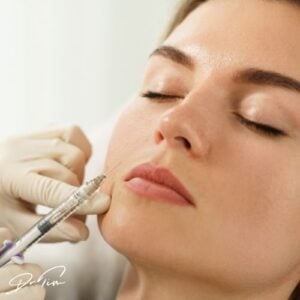 Lip design is the process by which you choose where to place filler in the lip or whether even not to do it at all, and this gets interesting because we should be designing treatments around all sorts of factors where one thing for sure is there isn’t one technique that’s going to solve all your problems or your patients problems. You’re matching it to their hopes and dreams, matching it to what they’re afraid of, to their medical history where all of that needs to come together in one final output that’s piecing together all the aspects relating it to product and technique and the patients themselves.
The first stage involves establishing what the patient’s actually after, and what happens is a lot of clinicians make assumptions which are often correct but they miss out on the real value of getting that said out loud in the consultation. A good example involves when patients bring photographs where many clinicians experience a heart sink moment, though it’s a really bad move to be negative in that situation since what patients are trying to do is communicate a really complicated idea since if you’re trying to communicate an aesthetic into words it’s challenging where we all lack the words like curvature, volume, detail, color, contrast, definition, projection.
A good clinician will pull from that image an interpretation of what they’re trying to say and trying to match that to their face, though there are two other aspects you should dig for beyond what they want aesthetically. They want that aesthetic result because they want to create a feeling in themselves where that feeling might simply be confidence or it might be now I feel like I can take more social risks or meet new people I wouldn’t have met, and they’re trying to create a feeling which sometimes means getting rid of a negative like I feel insecure about this where I don’t want to smile or creating a positive like I want to feel more confident.
Underneath that there’s some practical reason why this is going to make a difference in their life, and if you get to that level you really understand your patient where if I have my lips sorted I will feel confident enough to be more flirtatious if I’m looking for a boyfriend or to apply for a job that I want to feel on the front foot for. If you can get to the social impact they’re actually after where if I feel this way I will be able to behave differently in this situation which will improve my life that’s the key, and then they will listen to you because they know it’s about achieving their real goals and not just you selling them a milliliter of lip filler.
The next thing involves establishing the patient’s fears, and if you don’t establish the fears they come back to bite you later on where you’ve got to find out what your patient is scared of. Quite often if you don’t do this as part of a systematic process they will keep going on about it, and a classic learned over the years is when they are still trying to do the consultation on the bed like you’ve agreed the treatment plan and they’re still saying remember I want this means you haven’t done your full consultation. You need to figure out what they’re afraid of then you can talk about it and tweak your treatment plan, but if you just ignore those anxieties you end up with an anxious patient leaving with doubts.
The analysis of the lips involves making an official part of your consultation that I’m now analyzing your lips, and many people don’t where you go straight to injecting though if you want to do top-level consultation there’s an official moment where you start to analyze their lips making them understand there’s more to aesthetics than just big lips. One good tip before you start any facial analysis is start with a compliment where it should be a real compliment but always say something nice before you start with little things that can be improved.
The process involves first acknowledging what they’ve told you where if they’ve told you about their aesthetic goals often they’re onto something since most patients have picked up a ratio without any training because this is built into our DNA where most people beauty is healthy making it the same thing essentially. If they said I want more of a lip more like this celebrity and you’ve noticed that celebrity has symmetrical lips and she has asymmetrical lips, you will then say what you’re picking up is that the lip is a different ratio which means if we increase the ratio you’re moving close to the picture that you showed me though you’re actually moving closer to the scientific definition of beauty where you’re trying to pick out from what they’ve said and bounce back the science so that they can feel it’s justified.
There’s all sorts of things you can pick up about how to describe this beauty where your proportion, detail, even the contrast, the ratios, the curvatures all of these things you should aim to articulate to patients so that they get a conscious idea of what beauty is and you’re the one who gave it to them making you immediately the expert. When they can see that you’re designing an aesthetically beautiful result based on training you’re going to be far ahead of those who are just distributing filler.
After the analysis you’re in the realm of choosing your technique where this is the bit a lot of people have skipped everything up to and they’re just going straight for the technique, though really your technique should be specifically built around everything we’ve just learned from our patients. We’re trying to assemble the ideal technique and that means you’ve got to know lots of techniques, and if someone comes in and asks for Russian lips you need to know what the benefit of that technique is and how you can use it for specific cases.
What you should definitely avoid is trying to use the same technique on everyone because it just doesn’t work and you’ll find this out rapidly, where if you try and use the Russian lip technique on someone who’s got very very thin lips you’re going to be disappointed since there just isn’t the room to create that with that technique. The expert is seeing all the techniques like a box full of tools and you’re selecting the right tool for the job, and that also applies to the products you use and the instruments that go on the end of your needle so are you using a needle or cannula, what size, what length where all of that is building around avoiding risks and maximizing the aesthetic goal.
First step is you need to know your techniques and what the benefits of them are, though you’ll have a different experience to the next injector where if you talk to colleagues who’ve been injecting they will have a different opinion on the pros and cons of each technique. Although you can get that information it’s also important that you try these out yourself where you’ve got to make a decision on instinct because you’re the one holding the needle, and once you understand how all those techniques work and you’ve got the complete history of the patient you can pick a selection of techniques or components of different techniques.
You’ve got to know your products since it’s a little bit like the techniques where you will get different opinions on different products from different people, and what’s been discovered is listen to those opinions and then test it to get to know yourself where you can’t know a product based on what it looks like when the patient is in front of you because they all look pretty similar. What you want to do is take advice from people who’ve used products for years and figure out how they’re using different products, and then the best thing is to get to know products over time where a year of using one product as your primary lip filler will set in stone how that product behaves since you’re going to see them at follow-ups.
What’s believed is the biggest variable is around volume versus definition where there’s a tension since you can have a product that’s very good at producing volume but it tends to be less good at creating definition, and if you get something very good at creating definition you might disappoint people who want volume. As a broad brush stroke you should understand your products in those two dimensions and that will help you choose accordingly, though this does suggest that the dual technique might be good though it’s more expensive where you never get to do that unless you’re doing good consultation because it just sounds like you’re increasing the price for no reason.
Plenty of people have got a way bigger budget than they think when they understand the real dynamics going on where not many people figure that out since they just do the first thing the patient asks, and this is where great consultation changes budgets.
Join us for one of Dr Tim's FREE upcoming webinars.
Check dates here and save your spot
If you want to increase your knowledge about safe and effective lip filler injectable treatments, Dr Tim Pearce offers a series of fabulous courses, from foundation and upwards:
In addition, browse our FREE downloadable resources.
Dr Tim Pearce MBChB BSc (Hons) MRCGP founded his eLearning concept in 2016 in order to provide readily accessible BOTOX® and dermal filler online courses for fellow Medical Aesthetics practitioners. His objective was to raise standards within the industry – a principle which remains just as relevant today.
Our exclusive video-led courses are designed to build confidence, knowledge and technique at every stage, working from foundation level to advanced treatments and management of complications.
Thousands of delegates have benefited from the courses and we’re highly rated on Trustpilot. For more information or to discuss which course is right for you, please get in touch with our friendly team.


![Upper Facial Muscle Balance: Frontalis & Brow Depressors <br>[Asymmetry Series: Part 2A]](https://drtimpearce.com/wp-content/uploads/2026/01/Jude-Harford-Nurse-Practitioner-405x260.jpg)