
![Upper Facial Muscle Balance: Frontalis & Brow Depressors <br>[Asymmetry Series: Part 2A]](https://drtimpearce.com/wp-content/uploads/2026/01/Jude-Harford-Nurse-Practitioner.jpg)

Note:
This article was written by a guest contributor from our community. The views and clinical opinions expressed here belong to the author and do not necessarily reflect the opinions or endorsements of Dr Tim Ltd.
 Dr Tim Pearce
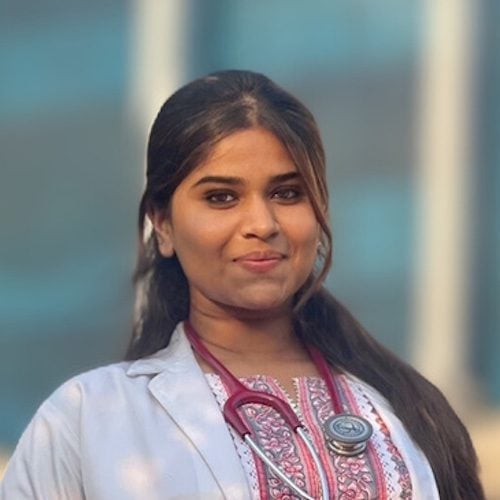
 Nurse Practitioner, skinByJude
Jude is a prescribing aesthetics nurse practitioner with a strong interest in menopausal skin health and regenerative treatments. Her focus is on achieving natural results through evidence-based practice using the highest quality product
For many nurses, the NHS is more than an employer. It is a culture, a commitment and often the foundation of professional identity. I spent years working within that environment, navigating long shifts, complex clinical situations and the emotional load that comes with caring for patients whose needs were increasingly intense. Although my work was meaningful, I reached a point where the pressures were beginning to erode my well-being. Like many nurses today, I began looking for a new way to use my skills while maintaining a healthier balance in my life.
Aesthetic medicine first appeared to me as a fresh and exciting opportunity. What I did not realise at the time was that moving into aesthetics would involve not only new clinical skills but also a complete shift in mindset. The journey proved far deeper, more challenging and ultimately more rewarding than I ever expected.
Nursing education provides a strong grounding in anatomy. Even so, nothing prepared me for the level of anatomical detail required in aesthetic practice. The face is incredibly complex. It contains layers of fascia, fat pads, muscles and vasculature that vary from person to person. Early on, I discovered that knowing the names of structures was not enough. Aesthetic work requires an ability to visualise the layers of the face in three dimensions. It also requires artistry. Creating a beautiful result depends on understanding proportion, balance and the ways in which light interacts with contour.
I realised quickly that if I wanted to be a standout practitioner, I needed far more than a foundation course. Advanced education became essential. Courses led by Dr Tim Pearce were particularly influential because they focused on clinical decision-making and complication management as well as technique. The Anatomy360 course was transformative. Building the face from the skull upward helped me understand the true relationships between anatomical structures and the points where ageing becomes most visible. That training strengthened every aspect of my assessment and improved both my precision and my aesthetic judgement.
The aesthetics training landscape can sometimes be misleading. Many practitioners enter the field believing that a short introductory course will equip them to move directly into practice. These courses are valuable as a starting point, but they cannot provide the level of knowledge or confidence required to work independently and safely.
Once I began treating patients, it was clear how much more I still needed to learn. Product rheology, vascular mapping, ageing pathways, full face assessment and complication management all require considerable study. Many nurses complete their foundation course and then feel too overwhelmed to progress further. Industry estimates suggest that a large percentage (as much as 70%) never go on to perform treatments regularly. This is usually because the gap between beginner training and safe autonomous practice is wider than expected.
For me, that realisation became a motivator rather than a barrier. I knew that extended training, mentorship and continued study were essential. Investing in high-quality education allowed me to feel confident in my decisions and ensured that I adhered to the expectations of the Nursing and Midwifery Council Code.
One of the most surprising hurdles in my transition was learning how to charge clients. It sounds simple, yet nurses are deeply conditioned to provide care without discussing money. For years, my focus in the NHS was purely clinical. When I began working privately, speaking about fees felt uncomfortable. I discounted my services far too often because I worried about seeming money-oriented.
Eventually, I realised that this approach was neither sustainable nor fair to myself. Aesthetic practice carries significant expenses. Safe treatment requires insurance, medical-grade products, appropriate premises, sterile consumables and ongoing education. Charging appropriately reflects the value and responsibility of the service provided. Once I reframed pricing as an essential part of safe and ethical practice, the discomfort eased, and my confidence grew.
The shift from the NHS to private aesthetics introduced an entirely new set of challenges. In the NHS, patients arrive automatically. There is no need to advertise or promote oneself. In aesthetic practice, nothing happens unless you make it happen.
I suddenly had to learn about branding, website creation, clinical governance in private settings, business insurance, bookkeeping, tax returns and client retention. At times, it felt as though I had started an entirely new career alongside my clinical one. Understanding that aesthetics is both a healthcare service and a business helped me establish systems and boundaries that now support smoother day-to-day practice.
Visibility was another area that pushed me far outside my comfort zone. I was never someone who enjoyed being in front of a camera. The idea of speaking to an online audience felt vulnerable and unfamiliar. Yet in modern aesthetic practice, social media is central to building trust and educating potential patients.
I began by creating both TikTok and Instagram accounts for my clinic. At first, I was nervous about every post. Over time, with dedicated social media training, I learned how to present information clearly, authentically and professionally. Although it was challenging at first, social media has become a powerful tool for patient education and for demonstrating my approach to treatment. It has opened doors to a wider community and has allowed patients to connect with me long before their first consultation.
Even after transitioning into aesthetics, my nursing values remain the core of my practice. Patients often tell me that they choose a nurse injector because they value safety, honesty and ethical decision making. The NMC Code continues to guide my work. It reminds me to prioritise people, practise effectively, preserve safety and act with professionalism at all times.
These values influence not only how I treat but also how I decide when treatment is appropriate. Sometimes the most important clinical decision is to decline a procedure. In a saturated market, this ethical approach is what helps nurses stand apart. It reinforces trust and ensures that patients receive care that prioritises their wellbeing over cosmetic trends.
My journey into aesthetics has required dedication, advanced study, confidence-building building and a willingness to embrace new skills. It has also allowed me to rediscover my passion for patient centred care in a completely new way. Today, I feel proud of the practice I am building and of the thoughtful, evidence-based treatments I offer.
Aesthetic medicine is demanding, but for nurses who commit to robust training and uphold strong professional values, it can become an incredibly fulfilling extension of nursing. It blends science with artistry and compassion with autonomy. Most importantly, it offers the opportunity to create meaningful change in the lives of those we treat.
This article was written by a guest contributor from our community. The views and clinical opinions expressed here belong to the author and do not necessarily reflect the opinions or endorsements of Dr Tim Ltd.
Dr Tim Pearce MBChB BSc (Hons) MRCGP founded his eLearning concept in 2016 in order to provide readily accessible BOTOX® and dermal filler online courses for fellow Medical Aesthetics practitioners. His objective was to raise standards within the industry – a principle which remains just as relevant today.
Our exclusive video-led courses are designed to build confidence, knowledge and technique at every stage, working from foundation level to advanced treatments and management of complications.
Thousands of delegates have benefited from the courses and we’re highly rated on Trustpilot. For more information or to discuss which course is right for you, please get in touch with our friendly team.


![Upper Facial Muscle Balance: Frontalis & Brow Depressors <br>[Asymmetry Series: Part 2A]](https://drtimpearce.com/wp-content/uploads/2026/01/Jude-Harford-Nurse-Practitioner-405x260.jpg)