
• Mail us: support@drtimpearce.com
  • Trustpilot
Dr Tim Pearce, eLearningDr Tim Pearce, eLearningDr Tim Pearce, eLearning Dr Tim Pearce, eLearning
  • eLearning Courses
        • ELEARNING COURSES

        • Techniques
          • BOTOX® Foundation Course
          • Pro Tox
          • Dermal Fillers Foundation Course
          • 8D Lip Design
          • Julie Horne Directs, Dr Tim Injects – February 2023
          • Eyelash Enhancement Serum Course
          • Anatomy360
          • Art Codes
        • Complications
          • Botulinum Toxin Complications Mastery
          • Dermal Filler Complications Mastery
          • Elective Lip Reversal
        • Profinity
        • Wellness
          • How To Introduce Longevity To Your Aesthetics Clinic
        • Marketing
          • DCAM 2.0
          • Canva Mastery: A Step-by-Step Guide
          • Email Marketing Course
          • Industry Photography Secrets
          • How to find your voice with video
        • Other Services
          • DPP for V300 Service
        • Packages
          • Foundation eLearning Package – SAVE 10%
          • Complications eLearning Package – SAVE 10%
          • Techniques eLearning Package – SAVE 20%
          • Marketing eLearning Package – SAVE 20%
          • Full eLearning Package – SAVE 35%
        • Reviews and Testimonials
        • FAQ – Online Courses
  • Downloads
        • Complications
          • 13 Extra Risky Injection Areas: Facial Vessel Map
          • Aspirating Experiment Test Results
          • Bruising Checklist: Prevent & Minimise Bruises from Injectables
          • Dermal Filler Complications: The Essential Guide
          • Delayed Onset Nodules: How To Diagnose And Treat
          • Diagnosing Complications: 7 Steps To Great Advice
          • Emergency Reversal Protocol
          • How To Avoid Causing a Lateral Rectus Palsy From Botulinum Toxins
          • Hyalase Consent Form: Downloadable Template
          • Lumps in Lips Guide: How to Diagnose, Manage & Treat
          • Tear Trough Oedema Protocol
          • Does Covid-19 Vaccine Cause Dermal Filler Reactions?
        • Injection Techniques
          • 26 Essential Injection Patterns For Botulinum Toxin
          • Botox Calculator
          • BOTOX Lesson – Gummy Smile
          • BOTOX Lesson – Hooded Eyes
          • Frequently Used Filler Volumes Facial Map
          • How To Improve Your Needle Control: 6-Step Blueprint
          • How to Prepare BOTOX – Step by Step Guide
        • Consultation Skills
          • Body Dysmorphia & Modification Checklist
          • Is It Safe To Treat? 5-Step Contraindication Check List
          • Medical Model For Cosmetic Procedures: An Essential Guide
        • Lips
          • Lip Consultation Question Checklist
          • Lip Anatomy Lesson
          • Common Needle/Cannula Choices For Lips
          • Lip Filler Aftercare Pack for Your Patients
          • Lip Design Blueprint – 4 Steps To Perfect Lip Augmentation
          • Master the Basics of Julie Horne’s Lip Technique
        • Longevity
          • Does HRT Increase Cancer Risk? Guide for Clinicians
          • Educating Patients About How Sugar Exacerbates Aging
          • How to Reduce Biological Age for Your Patients
        • Business & Marketing
          • Annual Profit Calculator
          • 5 Steps to Create a Successful Aesthetics Business
          • Injector’s Cheat Sheet – 7 Social Media Post Types
          • 7 Deadly Hashtag Sins
          • 7 Secret Locations to get Instagram Followers
          • 9 Video Marketing Mistakes
          • 15 Easy Instagram Reels Ideas
          • 3 Time-Saving Hacks for Social Media
          • Personal Branding Starter Kit
          • Value Audit Template: Price-per-1ml
          • World’s Top 5 Filler Brands – Survey Results
  • Products
    • Artistic Anatomy Poster Collection
    • Top 3 Posters Bundle
    • Original Anatomy Poster
    • Beautiful Lip Anatomy Poster
    • Download Pack – Forms & Leaflets
  • Blog
    • Meet the Writers
  • Podcasts
  • About
    • Dr Tim Pearce
    • Miranda Pearce
    • Careers & Recruitment
    • Webinars
    • Become a Model
  • Contact
  • Login

Login

Lip Filler Lumps and Bumps: What Injectors Need to Know

Blogs

  • ALL
  • Complications
  • Injection Techniques
  • Consultation Skills
  • Lips
  • Business & Marketing
You may be interested
Platelet-Rich Plasma (PRP) and Platelet-Rich Fibrin (PRF) in Skin Rejuvenation After 40

Platelet-Rich Plasma (PRP) and Platelet-Rich Fibrin (PRF) in Skin Rejuvenation After 40

January 27, 2026

Restoration of Older Lips: The Psychology, Aesthetics, and Anatomy You Need to Understand

Restoration of Older Lips: The Psychology, Aesthetics, and Anatomy You Need to Understand

January 22, 2026

New Technologies in the Field of Facial Aesthetics and Body Contouring

New Technologies in the Field of Facial Aesthetics and Body Contouring

January 20, 2026

Why I Still Treat Tear Troughs: A Response to Dr. Gavin Chan’s Viral Video

Why I Still Treat Tear Troughs: A Response to Dr. Gavin Chan’s Viral Video

January 15, 2026

Laser Platforms vs. Standalone Systems in Clinic Practice

Laser Platforms vs. Standalone Systems in Clinic Practice

January 13, 2026

Lip Filler Lumps and Bumps: What Injectors Need to KnowDr Tim Pearce
December 11, 2025

You’ve just completed a lip procedure, the patient looks great and leaves happy. Two days later, they message you about a lump. Sound familiar?

Lumps after lip procedures are actually relatively common and are one of the most frequent follow-ups you’ll encounter in aesthetic practice, affecting both patients and clinicians at some point in their experience with dermal fillers. Most are straightforward to resolve once you understand what’s causing them.

The challenge lies in accurate diagnosis. A lump that appears on day two requires a completely different response than one that emerges three months post-treatment. Understanding the underlying cause determines whether you’ll resolve the issue with gentle massage, medical intervention, or simply time.

The Three Types of Lumps You’ll Encounter

Not all lip filler bumps are created equal. Before you can treat them effectively, you need to identify which type you’re dealing with.

Procedural Lumps (Hematomas and Bruising)

The needle itself can cause tissue trauma. When you insert a needle into the lip tissue, you may create a small bruise or hematoma that presents as a lump. These tend to resolve on their own within days.
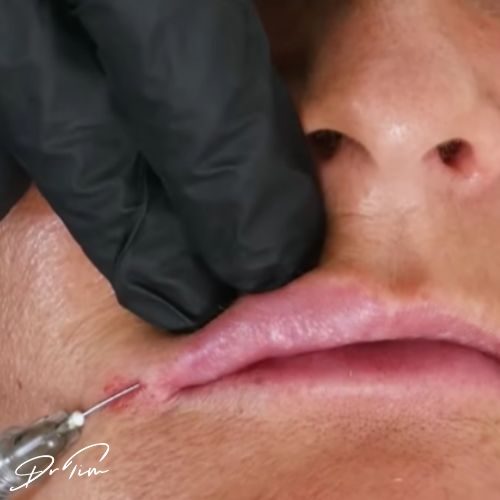
Lip filler procedural lump caused by needle trauma showing small hematoma and bruising after dermal filler injection
Procedural lump caused by needle insertion during lip filler treatment. This type of tender lump typically results from minor tissue trauma or hematoma and resolves on its own within days. Learn to differentiate between procedural lumps and other complications

The key identifier: they’re tender when touched. This tenderness differentiates them from other types of lumps you might encounter.

Filler Bolus Lumps (Non-Inflammatory Lesions)

This second category involves visible or palpable filler deposits that bother the patient. Think of it as a concentrated pocket of product sitting in the tissue. The patient can either see it or feel it, creating an aesthetic concern.
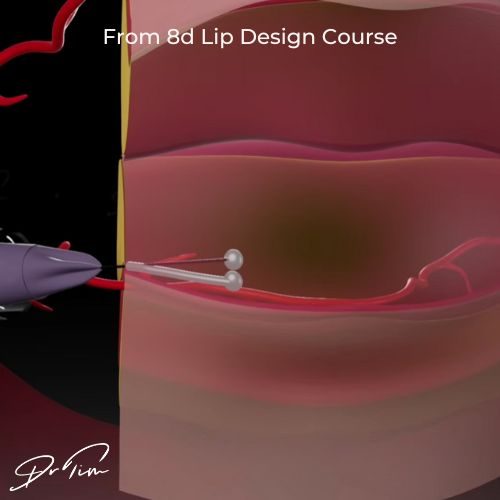
3D diagram showing filler bolus lump in lip tissue - non-inflammatory lesion from concentrated dermal filler deposit
Cross-sectional view of a filler bolus creating a non-inflammatory lump in the lip. These concentrated pockets of product can be massaged to integrate into tissue or may resolve with time. *From Dr. Tim’s 8D Lip Design Course – understanding proper filler distribution prevents bolus formation.

These non-inflammatory lumps respond well to treatment because they’re essentially just filler that hasn’t integrated properly. If you think about the mechanics, it’s a lump of filler sitting in tissue. You should be able to massage the area until it softens and blends into the surrounding tissue. The filler material itself isn’t causing inflammation or immune response. It simply needs proper integration.

Many procedures create a combination of post-injection swelling plus newly placed filler that hasn’t fully settled yet. The tissue is still responding to the procedure itself. Sometimes the cure is just time as the swelling resolves and the filler naturally integrates over the first week or two.

Inflammatory Lumps (Infection or Reactions)

The third type requires a different approach entirely. These lumps grow over time and need a medical response. Watch for lumps that increase in size, particularly if they’re asymmetrical with redness around them.

Inflammatory lump after lip filler showing asymmetrical swelling and redness indicating possible infection or allergic reaction
Inflammatory lump demonstrating asymmetrical swelling after lip augmentation. This type of lump grows over time and may indicate infection or allergic reaction, requiring medical intervention rather than massage. Recognize early warning signs to provide appropriate treatment.

This could signal the start of an infection, an established infection, or a reaction to the product.

Reactions typically cause the rest of the lip to swell up as well. The product can create very lumpy tissue when it reacts with the immune system.

How to Prevent Non-Inflammatory Lesions

The biggest preventive measure you can take happens before the patient leaves your clinic. After completing the procedure, do a gentle check for any lumps or bumps you can feel that day.

Here’s why this matters: if you leave a large bolus of filler in place, it tends to attract moisture and becomes firmer over the next few days. Massage before the patient leaves and you’ll decrease the number of follow-ups dramatically.

The technique matters here. “Smooth it, don’t move it” should be your mantra. Use a gentle squeeze that respects the shape of the lip you’re trying to create. You want to gently integrate the filler into the lip tissue rather than squashing it around. This approach should reduce non-inflammatory lump follow-ups significantly.

How to Reduce Inflammatory Lesions

Prevention of inflammatory nodules comes down to injection technique and clinical hygiene.

Keep the lip area as clean as possible during the procedure. This seems obvious, but it’s worth emphasizing. Anything that seals in bacteria might create problems down the line.

Advise patients not to apply makeup immediately after treatment, particularly makeup that isn’t sterile. The same principle applies: you don’t want to trap potential pathogens against the injection sites.

Consider reducing your entry points. Each needle insertion creates a potential pathway for bacteria to enter. The fewer entry points you make, the lower your infection risk.

Schedule lip procedures strategically. Avoid doing them on days when you’re performing other procedures, particularly dental work. The more bacteria enters the bloodstream around the patient’s head, the more likely some of those bacteria may settle onto filler deposits. This can lead to inflammatory lumps and bumps caused by bacteria, which are the hardest type to treat.

Your Treatment Approach Based on Lump Type

Once you’ve identified the type of lump, you can apply the appropriate intervention.

For post-procedural swelling lumps, give them time. If you think the lump stems from normal tissue response and swelling, patience often resolves the issue without intervention.

For filler bolus lumps, massage works well. When you’ve determined the lump is due to filler placement or a large bolus that’s distracting for the patient, gentle massage should integrate the product. Remember the technique: smooth, don’t move.

For inflammatory lumps, you need to treat the medical causes. Whether dealing with infection or allergic reaction, these require appropriate medical intervention. Don’t try to massage away an inflammatory response.

When to Consider Hyaluronidase

After trying light touch interventions like massage and time, you have one final option: dissolving the lumps with hyaluronidase.

This is your sledgehammer, so try not to reach for it immediately. You want to avoid going straight to dissolving on day two or three after a procedure, even if the patient expresses strong dissatisfaction with a lump they’re experiencing. Give these lumps time first.

Here’s why patience matters: many lumps stem from hematomas and swelling rather than the filler itself. There’s no guarantee that reversing the filler will eliminate a lump if the underlying cause is bruising or tissue trauma. You might dissolve perfectly placed filler and still have a lump from the hematoma. Or you might create a different type of lump through the dissolution process itself.

Work your way through the interventions with light touch first. Start with observation if you suspect post-procedural swelling. Move to massage if you’ve identified a filler bolus. Only escalate to more drastic measures once you’ve gone through the process systematically and established that gentler approaches won’t resolve the issue.

Building Your Intervention Sequence

You should have a systematic approach to dealing with lumps and bumps. Apply interventions sensibly, doing the minimal intervention necessary.

Most patients return to a happy state within the first or second visit when you follow this framework. Start with the least invasive option. Assess the response. Escalate only when needed.

Improving Your Outcomes Over Time

The more you think about lip filler complications and refine your injection technique and post-procedure massage, the fewer lumps you should encounter over time. They’ll never reach zero, though. Lumps remain a common side effect after lip procedures, no matter your skill level.

This is normal and expected. Don’t aim for perfection or beat yourself up when lumps occur. Instead, aim for competent identification and systematic treatment of the lumps that do appear. Your goal should be reducing the frequency while improving your response when they do happen.

Your technical skills will improve with each case. Every patient teaches you something about product placement, individual tissue response, and the variations between patients. Some patients retain more fluid. Some have thinner lip tissue. Some naturally develop more post-procedural swelling. Pay attention to these patterns.

Review your own practice regularly. Which techniques in your hands create more follow-ups? Which create fewer? Which patients tend to develop lumps, and what do they have in common? Adjust your approach accordingly. This self-reflection and adaptation separates practitioners who continually improve from those who repeat the same complications indefinitely.
Ready to master your lip filler strategy and increase your lip prices?

Join our exclusive free training where we explore 3D lip anatomy and learn from Dr Tim how to attract high value lip patients.

Register for the next free webinar here >

8d Lips Webinar
8d lips - high value lip fillers

Dr Tim Pearce eLearning

Dr Tim Pearce MBChB BSc (Hons) MRCGP founded his eLearning concept in 2016 in order to provide readily accessible BOTOX® and dermal filler online courses for fellow Medical Aesthetics practitioners. His objective was to raise standards within the industry – a principle which remains just as relevant today.

Our exclusive video-led courses are designed to build confidence, knowledge and technique at every stage, working from foundation level to advanced treatments and management of complications.

Thousands of delegates have benefited from the courses and we’re highly rated on Trustpilot. For more information or to discuss which course is right for you, please get in touch with our friendly team.

Dermal Filler & Lips eLearning Courses

If you want to increase your knowledge about safe and effective lip filler injectable treatments, Dr Tim Pearce offers a series of fabulous courses, from foundation and upwards:

  • 8D Lip Design
  • Elective Lip Reversal
  • Dermal Fillers Foundation Course
  • Dermal Filler Complications Mastery

In addition, browse our FREE downloadable resources.

Share This Article
Facebook Twitter Pinterest Linkedin
Prev Post
Next Post

Related Articles

Platelet-Rich Plasma (PRP) and Platelet-Rich Fibrin (PRF) in Skin Rejuvenation After 40 Bestseller

Platelet-Rich Plasma (PRP) and Platelet-Rich Fibrin (PRF) in Skin Rejuvenation After 40

January 27, 2026

Platelet-Rich Plasma (PRP) and Platelet-Rich Fibrin (PRF) in Skin Rejuvenation After 40
By Andrea Callaway
January 27, 2026

Platelet-Rich Plasma (PRP) and Platelet-Rich Fibrin (PRF) in Skin Rejuvenation After 40

READ MORE
Restoration of Older Lips: The Psychology, Aesthetics, and Anatomy You Need to Understand Bestseller

Restoration of Older Lips: The Psychology, Aesthetics, and Anatomy You Need to Understand

January 22, 2026

Restoration of Older Lips: The Psychology, Aesthetics, and Anatomy You Need to Understand
By Andrea Callaway
January 22, 2026

Restoration of Older Lips: The Psychology, Aesthetics, and Anatomy You Need to Understand

READ MORE
New Technologies in the Field of Facial Aesthetics and Body Contouring Bestseller

New Technologies in the Field of Facial Aesthetics and Body Contouring

January 20, 2026

New Technologies in the Field of Facial Aesthetics and Body Contouring
By Andrea Callaway
January 20, 2026

New Technologies in the Field of Facial Aesthetics and Body Contouring

READ MORE

Add your Comment

Popular Courses

BOTOX® Foundation Course

BOTOX® Foundation Course

Pro Tox

Pro Tox

8D Lip Design

8D Lip Design

SEE MORE

CONTACT US

    contact injection
    Dr Tim Pearce

    Improve your medical
    aesthetics business

    • Home
    • Courses
    • About
    • Contact
    • Dr Tim Limited Terms and Conditions of Sale
    • Privacy Policy
    • Website Terms Of Use
    • Careers
    Login Dr Tim Pearce Login
    © Copyright Dr Tim Ltd, 2025
    We use cookies on our website to give you the most relevant experience by remembering your preferences and repeat visits. Read More. By clicking “Accept All”, you consent to the use of ALL the cookies. However, you may visit "Cookie Settings" to provide a controlled consent.
    Cookie Settings Reject All Accept All
    Manage consent

    Privacy Overview

    This website uses cookies to improve your experience while you navigate through the website. Out of these, the cookies that are categorized as necessary are stored on your browser as they are essential for the working of basic functionalities of the website. We also use third-party cookies that help us analyze and understand how you use this website. These cookies will be stored in your browser only with your consent. You also have the option to opt-out of these cookies. But opting out of some of these cookies may affect your browsing experience.
    Necessary
    Always Enabled
    Necessary cookies are absolutely essential for the website to function properly. These cookies ensure basic functionalities and security features of the website, anonymously.
    CookieDurationDescription
    cookielawinfo-checkbox-analytics11 monthsThis cookie is set by GDPR Cookie Consent plugin. The cookie is used to store the user consent for the cookies in the category "Analytics".
    cookielawinfo-checkbox-functional11 monthsThe cookie is set by GDPR cookie consent to record the user consent for the cookies in the category "Functional".
    cookielawinfo-checkbox-necessary11 monthsThis cookie is set by GDPR Cookie Consent plugin. The cookies is used to store the user consent for the cookies in the category "Necessary".
    cookielawinfo-checkbox-others11 monthsThis cookie is set by GDPR Cookie Consent plugin. The cookie is used to store the user consent for the cookies in the category "Other.
    cookielawinfo-checkbox-performance11 monthsThis cookie is set by GDPR Cookie Consent plugin. The cookie is used to store the user consent for the cookies in the category "Performance".
    viewed_cookie_policy11 monthsThe cookie is set by the GDPR Cookie Consent plugin and is used to store whether or not user has consented to the use of cookies. It does not store any personal data.
    Functional
    Functional cookies help to perform certain functionalities like sharing the content of the website on social media platforms, collect feedbacks, and other third-party features.
    Performance
    Performance cookies are used to understand and analyze the key performance indexes of the website which helps in delivering a better user experience for the visitors.
    Analytics
    Analytical cookies are used to understand how visitors interact with the website. These cookies help provide information on metrics the number of visitors, bounce rate, traffic source, etc.
    Advertisement
    Advertisement cookies are used to provide visitors with relevant ads and marketing campaigns. These cookies track visitors across websites and collect information to provide customized ads.
    Others
    Other uncategorized cookies are those that are being analyzed and have not been classified into a category as yet.
    SAVE & ACCEPT