
You may be interested




 Dr Tim Pearce
Evidence-Based Guidance for Injectors
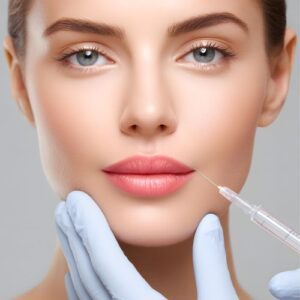 When patients walk into your clinic requesting specific lip trends they’ve seen on social media, how do you respond?
Let’s break down four popular lip filler techniques, separating genuine aesthetic innovations from marketing hype and outright dangerous practices.
Heart shaped lips: Marketing genius or technique revolution?
The heart shaped lips technique, credited to Dr. Bob Khanna, reflects a natural lip shape that injectors can intentionally create or enhance in their patients. The method involves dental floss hooked between the teeth and pulled over the top, with filler injected on either side.
The result makes sense because this mimics a natural lip shape. The technique fits within aesthetic norms, making it something you could provide to a certain cohort of patients who already have this underlying structure.
But it’s important to question whether the dental floss actually makes a difference to the outcome.
The way filler works suggests that when you inject into a quadrant of the lip, the product doesn’t flow easily to the other side of that quadrant, and it’s doubtful whether injecting in the same place without the dental floss would create a vastly different result. With a little palpation, you’d probably achieve something very similar.
The real power of this technique might lie in its marketing appeal. When patients see those images, they immediately understand what you’re trying to create. This generates a clear image in their head of what they want and how to ask for it. The dental floss becomes a communication tool for the aesthetic result, even if it’s not strictly necessary to create two separate lower tubercles that form the heart shape.
Should you try it?
For the right patient with the right face shape, there’s no harm in this technique. There are concerns about whether it’s truly a powerful technique, but the result itself isn’t bad to aim for if you’re conservative with your product and simply creating a nice shape.
No needle filler: The hyaluron pen problem
SkinViva was one of the first clinics offering a chance to use the hyaluron pen. After testing, the patient got horribly bruised and didn’t achieve a particularly nice result, so we never offered it to any of our patients after that. Despite being heavily sold by drug reps and loving the story of being able to inject filler without causing swelling or needle-type injuries, we found that story didn’t hold up in practice.
Why patients want this treatment
The idea is compelling if you’re afraid of needles, having your lips filled without a needle sounds ideal. But the replacement for the needle creates its own problems.
The hyaluron pen uses a high velocity jet of filler that’s actually less targeted than a needle. The amount of energy required to fire a blob of hyaluronic acid through the skin is significant. That energy causes trauma to the capillaries.
The device offers much less control because you end up with filler at different levels. Sometimes it goes deeper, but quite often it sits more superficial than traditional injections. When filler is nearer the surface, you’re more likely to have lumps, you’ll need massage, and you’ll absolutely still get bruising and swelling despite claims about not causing trauma.
You cannot fire gel through someone’s lip without causing trauma. This is inherent to how the product goes in. It’s a high energy procedure, and high energy means trauma.
The marketing versus reality gap
If you’re a patient considering this treatment, don’t expect painless procedures with no side effects. That’s how it’s advertised so many times, but it’s complete nonsense.
Here’s a useful principle: there are no effects without side effects. Everything that works will also cause potential side effects. When someone claims zero side effects, you know they’re marketing a lie to you.
The other concern involves the detailed work. When injecting lips, think about angles, proportions, the vermilion border, and the details. You cannot take those considerations into account while firing a jet of filler into the body of the lip.
The device may be suitable for some volume, but you’re never going to restore the shape and detail of the lips using one of these devices. That’s a big limitation for patients.
Keyhole lips: Aiming for the hole, not the donut
The keyhole lips technique is similar to heart shaped lips, but the idea involves creating a little space in the lips visible when the person is resting.
The association with very full lips makes this technique appear intriguing. If your lips are very full during youth, you’re more likely to have a structure so strong that you leave a little area that doesn’t close properly.
What patients actually want
The thing people want is fuller, more voluptuous lips, which they associate with that hole. The hole itself isn’t necessarily what’s sexy and in some cases can look odd.
Be very careful about aiming for such a specific thing. You’re effectively aiming for the hole, not the donut. That’s not necessarily a good way to design treatments. You want to be looking at the overall face and aiming for great shape, not the hole.
Should you try it?
If a patient already has that shape and there’s a small hole, you could say they might be able to have the keyhole lip look. But this isn’t a good goal in the consultation – make patients think more broadly about the shape, volume, and details of their lips.
If they get a little hole there, it can be a side effect that makes them happy. But it’s safe not to not aim for it as a primary goal in consultations.
Devil lips: Where medical ethics draw the line
The devil lips result went viral a couple of years ago. It involves injecting the lips with vertical injections aggressively to create additional peaks in the lip.
It shows how powerful a vertical injection is at everting the lip. But the technique is obviously not compatible with being a medical injector.
The body modification boundary
If you’re a medical professional, you need to understand that your goal always has to be compatible with the patient’s health. By the time you’re creating devil shaped lips, you’re well into the realm of body modification, which is not compatible with being a medical professional.
It’s not recommended that any practitioner do this procedure and can border on being unethical. That doesn’t mean people don’t want it or that some people aren’t happier with it, but from a medical perspective, it’s an unethical thing to do.
The differentiation psychology
Body modification is a reasonable thing for people to do if it brings them joy, potentially meeting the psychological need for differentiation and variety.
But you can’t do it as a doctor. It’s about people trying to differentiate themselves, something we all do in our own ways.
The marketing power of trends
What these four techniques reveal is something crucial for aesthetic practitioners: the power of a compelling story.
Heart shaped lips work as a concept because patients can visualize exactly what they’re getting. The dental floss creates a clear mental image, even if it doesn’t fundamentally change the technical outcome.
No needle fillers promise the impossible, results without side effects, and prey on needle anxiety while delivering worse outcomes.
Keyhole lips trade on the association between fullness and that distinctive gap, even though the gap itself might not be the attractive feature.
Devil lips went viral precisely because they’re shocking and extreme, showing how powerful visual trends can be on social media.
As a practitioner, your job is to see through the marketing to the actual technique. Understand what patients truly want when they request these trends. Often, they want fuller, more attractive lips, not the specific technical details of how those lips are created.
The ethical practitioner’s checklist
When a patient comes in requesting a trending technique:
- Assess their underlying anatomy. Does their lip structure actually support this look? Heart shaped lips and keyhole lips both require specific baseline structures to look natural.
- Understand what they really want. When someone asks for keyhole lips, do they want that specific gap, or do they want fuller, more voluptuous lips that happen to be associated with that look?
- Know your ethical boundaries. Some requests, like devil lips, cross the line from aesthetic enhancement into body modification. That’s not medical practice.
- Question the marketing hype. If something sounds too good to be true, like painless, bruise-free lip filler, it probably is. No needle devices still cause trauma because high velocity gel injection is inherently traumatic.
- Focus on overall facial harmony. Don’t get so fixated on achieving a specific trendy detail that you lose sight of creating beautiful, balanced lips that suit your patient’s face.
The bottom line for aesthetic injectors
Lip filler trends offer valuable insights into patient desires and the power of visual communication in aesthetics. Some trends, like heart shaped lips, represent reasonable techniques for the right patients. Others, like hyaluron pens, promise results they can’t deliver. And some, like devil lips, cross ethical boundaries that medical professionals cannot cross.
Your role as a practitioner is to understand these trends, assess them critically, and guide your patients toward outcomes that are both beautiful and medically sound. Be conservative with product, respect natural anatomy, and always prioritize patient safety over trending techniques.
When in doubt, aim for the donut, not the hole.
Watch the full Aesthetics Mastery Show
Lip Filler Trends: Good or Bad?
In this episode, Dr Tim shares his views on the latest lip filler trends and discusses whether they’re safe to perform, or whether you should be steering your patients away. Including sections on:
- Heart Shaped Lips
- No Needle Filler – the Hyaluron Pen
- Keyhole Lips
- Devil Lips
You can also subscribe to our YouTube channel for really useful regular tips and advice. 
Dr Tim Pearce eLearning
Dr Tim Pearce MBChB BSc (Hons) MRCGP founded his eLearning concept in 2016 in order to provide readily accessible BOTOX® and dermal filler online courses for fellow Medical Aesthetics practitioners. His objective was to raise standards within the industry – a principle which remains just as relevant today.
Our exclusive video-led courses are designed to build confidence, knowledge and technique at every stage, working from foundation level to advanced treatments and management of complications.
Thousands of delegates have benefited from the courses and we’re highly rated on Trustpilot. For more information or to discuss which course is right for you, please get in touch with our friendly team.
Dermal Filler & Lips eLearning Courses
If you want to increase your knowledge about safe and effective lip filler injectable treatments, Dr Tim Pearce offers a series of fabulous courses, from foundation and upwards:
- 8D Lip Design
- Elective Lip Reversal
- Dermal Fillers Foundation Course
- Dermal Filler Complications Mastery
In addition, browse our FREE downloadable resources.