


Note:
This article was written by a guest contributor from our community. The views and clinical opinions expressed here belong to the author and do not necessarily reflect the opinions or endorsements of Dr Tim Ltd.

March 19, 2026
March 24, 2026
 Dr Tim Pearce

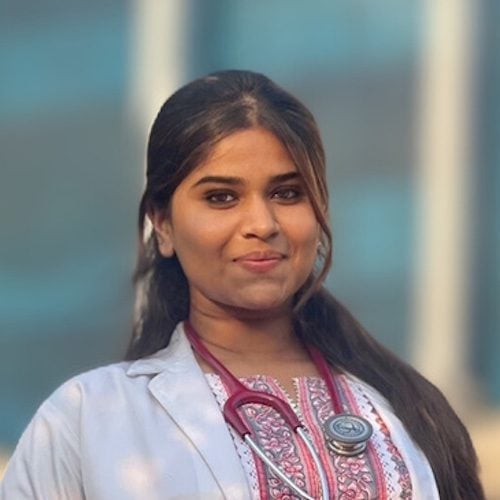
Dr. Rakshitha Jayaprakash is a future-focused MD dedicated to the intersection of science-backed beauty and systemic health. Moving beyond traditional “quick fixes,” she specializes in Regenerative Aesthetics, focusing on how to biologically optimize the skin for long-term vitality rather than just temporary change.
Her clinical philosophy centers on the belief that a natural glow is the result of living optimally. By prioritizing longevity and cellular health, Dr. Rakshitha helps patients move away from transactional treatments toward comprehensive anti-aging solutions that empower the skin to function and look younger.
https://www.instagram.com/dr.rakshitha.jayaprakash.md/
As aesthetic clinicians, we have reached a glorious, yet dangerous, crossroads. For the last decade, our industry has largely focused on a transactional model of the “quick fix.”
Patients simply walk in, point to a line, and ask for a specific number of Botox units or a syringe of filler. As practitioners, it is easy to fall into the role of a technician by delivering a product to merely meet a demand. However, as we move deeper into the era of regenerative medicine and longevity, this transactional approach is no longer sufficient. If we want to lead our field and provide true clinical excellence, we must stop selling units and start selling comprehensive anti-aging solutions to really help our patients.
The first step we need to take as a community is to shift our vocabulary and our mindset. We must treat our patients as patients, not clients. A “client” suggests a superficial retail relationship based on a specific request and a financial transaction. A “patient” is someone who trusts us to look beyond their immediate request and provide what is medically best for their long-term health. This is the difference between the technician mentality and the clinician mentality. When we embrace this clinician-patient bond, we stop being order-takers and start being medical mentors.
When we sell “units,” we participate in the commoditization of medical procedures. This “unit-based” mindset reduces a complex medical intervention—requiring deep knowledge of facial anatomy and patient safety—to a simple grocery store transaction. It invites the patient to shop for the lowest prices rather than the highest skill level.
More importantly, the quick-fix model often ignores the underlying health of the skin. A patient may leave with a temporarily smoothed forehead, but if their cellular senescence is high and their dermal density is thinning, we haven’t provided a solution; we’ve only provided a temporary, superficial mask.
An “anti-aging solution” treats the skin as a dynamic organ, which it is. Our goal should be to improve the “health span” of the skin by addressing markers like collagen synthesis and oxidative stress. When you sit down for a consultation, shift the conversation. Instead of asking, “Where would you like some filler?” try asking, “How can we best invest in your skin today so you get long-lasting results that help you age naturally?”
This shift achieves two things:
By educating our patients on the biology of the skin, we empower them to invest in solutions that offer compounding interest. We must help them understand that skin health does not exist in a vacuum. Think about the profound difference in how a patient feels when their hormones are balanced, their sleep is optimised, and their overall health is at its peak. They don’t just look better; they function better.
The future of our industry lies in this synergy. As clinicians, it is our responsibility to guide patients toward this internal optimisation because a “quick fix” on the surface will never outshine the glow of true systemic health. A series of regenerative protocols may not give the instant “wow” of a lip filler today, but in time, that patient will have skin that is structurally and biologically superior to their peers. They won’t just look younger; they will be biologically younger.
Moving from a “unit-based” practice to a “solution-based” practice requires us to be brave enough to say “no” to a patient who wants a quick fix that doesn’t serve their long-term health.
However, the rewards are immense. You will find that your patients are more loyal, your results are more natural, and your practice feels more fulfilling. We are not just smoothing skin; we are providing medical solutions for the most visible organ of the human body. Let’s start treating it—and our patients—with the respect they deserve.
This article was written by a guest contributor from our community. The views and clinical opinions expressed here belong to the author and do not necessarily reflect the opinions or endorsements of Dr Tim Ltd.
Dr Tim Pearce MBChB BSc (Hons) MRCGP founded his eLearning concept in 2016 in order to provide readily accessible BOTOX® and dermal filler online courses for fellow Medical Aesthetics practitioners. His objective was to raise standards within the industry – a principle which remains just as relevant today.
Our exclusive video-led courses are designed to build confidence, knowledge and technique at every stage, working from foundation level to advanced treatments and management of complications.
Thousands of delegates have benefited from the courses and we’re highly rated on Trustpilot. For more information or to discuss which course is right for you, please get in touch with our friendly team.