


FREE Complications Webinar
Want to overcome your fear of complications and confidently master anatomy?
Join us for one of Dr Tim's FREE upcoming webinars. .
Check dates here and save your spot
 Dr Tim Pearce
If you want to upgrade your injection confidence, then your anatomy knowledge is where that confidence starts. Because when you understand exactly where muscles originate, where they insert, and what happens when you relax them with botulinum toxin, you make better treatment decisions while avoiding complications and achieving consistent results.
This blog walks through the muscular anatomy of the face, working from the forehead down to the neck, covering each muscle you’ll encounter in aesthetic practice whether you’re treating it directly or working around it to avoid unwanted effects.

The frontalis muscle runs from the occipital bone all the way through to the brow ridge, which is why you’ll sometimes hear it called the occipitofrontalis because of that extensive connection. This muscle elevates the eyebrows, though there’s often a component that pulls the forehead down toward the brow as well, making the interplay between elevation and downward pull something your injection pattern needs to account for.
You treat frontalis with botuline toxin to reduce horizontal forehead lines, and in certain cases treating this muscle can also lift the eyebrows depending on how you approach the balance between these opposing forces.
Part of the glabella complex, the procerus muscle pulls the forehead downwards and creates a horizontal line across your nose when it contracts. This horizontal line is the most common reason you might treat procerus in isolation, getting rid of that line while sometimes factoring the treatment into non-surgical rhinoplasty approaches.
This is the main muscle responsible for eleven lines, starting on the bone just above your nose and running to the dermis of your skin where it pulls the skin inwards and causes that characteristic crease. When you inject the corrugator supercilii, you reduce that angry expression patients complain about so they look more relaxed, with the lines between the brows softening and the wrinkles diminishing because you stop the muscle from moving as much.
The depressor supercilii crosses the corrugator muscle, and while some consider it simply a branch of orbicularis oculi, it does contribute to frowning in ways that matter for treatment. You usually treat it alongside the glabella complex without having to think about it separately because it meshes so closely with the corrugator supercilii, and treating it as part of frown line treatment can cause a small lift to the medial brow.
The most superficial muscle in the periorbital area, orbicularis oculi, lies on top of the other muscles and causes lateral canthal lines, though its functions go well beyond crow’s feet. When you close your eyes tight, orbicularis oculi does that work while pulling the eyebrows down, pulling the cheeks up, and creating wrinkles around your eyes.
When you relax orbicularis oculi with botuline toxin, you get the opposite effects where the eyebrow may lift slightly and lateral canthal lines reduce. A potential side effect is that the cheek becomes less elevated during smiling, which patients don’t usually want, so it’s worth knowing before you treat because that’s how this muscle works.
The primary muscle for smiling, zygomaticus major elevates the corners of the mouth and pulls the cheeks up in ways you rarely want to interfere with cosmetically. You rarely inject it unless someone has an unusually strong muscle causing too much contractility, because generally you want to avoid zygomaticus major so the smile stays active.
More of a lip elevator than zygomaticus major, this muscle sits medial to its larger counterpart and contributes to upper lip movement.
Medial and inferior to zygomaticus minor, this muscle lifts the lip up in ways you don’t purposely target often, though it can be part of gummy smile treatment when the clinical situation calls for it.
The longest named muscle in the body elevates the lip directly and contributes to the snarl expression by pulling on the nostril. You treat this muscle specifically to stop its elevation so the gums don’t show during a smile, placing the injection just lateral to the nostril where you can access the muscle effectively.
Embryologically four muscles that come together to form what looks like a sphincter muscle to the untrained eye (though it isn’t truly structured that way), orbicularis oris contracts both the upper and lower lip to narrow the mouth. It functions in speech, expression, whistling, and similar movements you can control throughout daily activities.
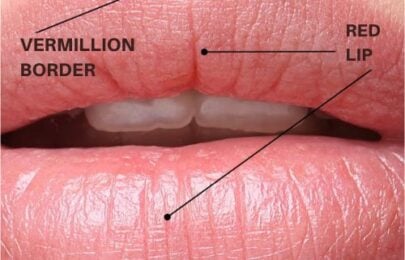
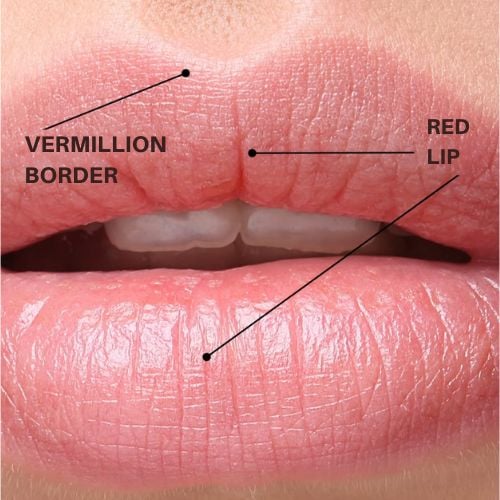
You often inject orbicularis oris to reduce superficial muscle fiber strength when someone has upper lip lines or lower lip lines, and increasingly the so-called lip flip uses this muscle too. One theory behind the lip flip is that you relax the muscle where it inserts into the vermilion border, making that part of the lip bigger while potentially getting a slight increase in resting tone in the muscle superior to the injection point, which creates that pout effect by contracting higher up and relaxing lower down. The effect is subtle but works for some people when applied with the right technique.
This muscle pulls down the corner of the mouth, and you treat depressor anguli oris specifically to cause the opposite effect since aging can bring lost fat and lost resistance to movement that results in a downturned mouth. Relaxing this muscle allows the opposite to occur, with roughly two units into each muscle providing a small lift to the corners of the mouth.
Medial and deep to depressor anguli oris, this muscle pulls the lip outwards with varying strength across different patients. Some people have quite a strong depressor labii inferioris muscle, and when that muscle is particularly strong you’ll see all the lower teeth when the person smiles because of that strong lateral pull.
The mentalis muscle pulls the chin up, starting on the bone in the middle of the chin before its fibers go down and meet at the point of the chin where you can often see them causing that little indentation sometimes called an ice pick shape or an orange peel effect on the skin. The muscle fibers pull the skin inwards, which is one of the reasons you might treat this muscle.
You might treat mentalis for two reasons: first, to reduce that texturing on the chin where up to four to six units can smooth out the chin surface, and second, to help the chin lower down so it remains the low point of the face. A heart-shaped face with the chin as the low point is a marker of beauty, and botuline toxin treatment in mentalis can support that aesthetic goal.
You never really treat buccinator with botuline toxin, but it’s worth knowing about since this muscle runs on the deepest surface of your cheek with a fat pad above it. Two interesting facts about buccinator: it’s the strongest muscle in a baby’s body because it’s used for sucking during breastfeeding or bottle feeding, and it’s sometimes called the bugle muscle because bugle players use it extensively during performance.
On the other side of the fat pad above the buccinator muscle, risorius originates from the surface of the masseter muscle and contributes to smiling in ways you mainly encounter as a side effect of treating the masseter muscle. When you accidentally relax risorius along with masseter, you affect the patient’s smile where they wanted jawline slimming but instead got a reduction in their smile, which is not a pleasant outcome at all. This happens from hitting the origin of risorius just where it attaches to the masseter, so knowing this anatomy helps you avoid that complication.
You see risorius most active during a really good laugh when all the facial muscles contract and pull sideways in that full expression of joy.
The masseter muscle runs from your zygoma and is involved in biting, functioning as the strongest muscle during contraction when you bite. You can feel masseter very clearly when you bite down, watching it push out laterally in a way that provides a useful test if you’re trying to shrink this muscle to see exactly where the most lateral point sits.
You treat the masseter when you want to shrink its size to create a more heart-shaped face, which works well in females or in someone with a hypertrophic masseter causing a facial shape that’s less than ideal. You shrink the muscle with injections right into the apex, and treating masseter is sometimes used for bruxism too since unintentionally contracting the muscle during the night and causing headaches can often be solved by reducing the strength of masseter with injections here.
Near the masseter, the temporalis muscle helps you chew as one of the muscles involved in mastication. You don’t tend to treat temporalis, but when you bite down you’ll often see contraction in the temporal area just like you would see masseter contract at the same time, showing how these chewing muscles work together.
The nasalis muscle causes little lines on the nose (often called bunny lines) that you can treat with two to four units each side quite safely. The injection goes near the muscle’s origin on the bone rather than chasing it down into the face where it inserts, keeping the treatment focused and effective.
A fascinating muscle that runs from your chest all the way up to mesh with the SMAS in the face, the platysma offers interesting possibilities when you relax it in the neck. You can sometimes get an unexpected benefit of lifting the mid-face, and while the effect is subtle it does work in some patients who respond well to this approach.
Treating platysma also helps you get more definition around the jawline while softening vertical lines that develop as strands of muscle become visible in the neck. You can improve those by relaxing them with botulinum toxin, though this is a high-dose muscle where you’re using up to 80 units sometimes to relax that whole sheet of muscle. The dosage might seem high but it does have multiple benefits in the face when treated properly.
Facial muscle anatomy is your foundation for confident injecting, with each muscle covered here connecting to your daily practice decisions about where to place injections, how to avoid complications, and what effects to expect. When you understand the origins, insertions, and functions of these muscles, you move from following rote patterns to making strategic treatment choices for each individual patient.
The muscles work together as a system where treating one affects the balance of elevators and depressors across the face. The frontalis elevates while the glabella complex depresses, and the smile muscles pull in different directions while the depressors work in opposition. Understanding these relationships means understanding how your treatments will impact facial expression and aesthetics in ways that create natural, harmonious results.
Join us for one of Dr Tim's FREE upcoming webinars. .
Check dates here and save your spot
Dr Tim Pearce MBChB BSc (Hons) MRCGP founded his eLearning concept in 2016 in order to provide readily accessible BOTOX® and dermal filler online courses for fellow Medical Aesthetics practitioners. His objective was to raise standards within the industry – a principle which remains just as relevant today.
Our exclusive video-led courses are designed to build confidence, knowledge and technique at every stage, working from foundation level to advanced treatments and management of complications.
Thousands of delegates have benefited from the courses and we’re highly rated on Trustpilot. For more information or to discuss which course is right for you, please get in touch with our friendly team.