



Note:
This article was written by a guest contributor from our community. The views and clinical opinions expressed here belong to the author and do not necessarily reflect the opinions or endorsements of Dr Tim Ltd.
 Dr Tim Pearce
 Beverly Darwin began her career in aesthetics in 2005 as the founder of BeauMedix Clinic UK. Over the years, she has trained extensively across nearly every aspect of aesthetic medicine, gaining comprehensive expertise in both clinical techniques and patient care.
Through experience and results-driven practice, she has refined her focus to the treatments that deliver the most consistent outcomes and that she finds most rewarding to perform. Her approach blends technical skill with a deep understanding of skin health and rejuvenation, reflecting nearly two decades of dedication to the art and science of aesthetics.
https://www.instagram.com/bev_darwin/
Well yes, but only in the sense that it is one of the oldest aesthetic skin regenerative treatments known and has evolved since 1905 and retained its important position in Aesthetic Medicine still having an important role and also a future.
Microneedling in its basic form began in 1905 when a German dermatologist used rotating wheels and dental burns to treat scars. This being the earliest ancestor of microneedling or dermabrasion.
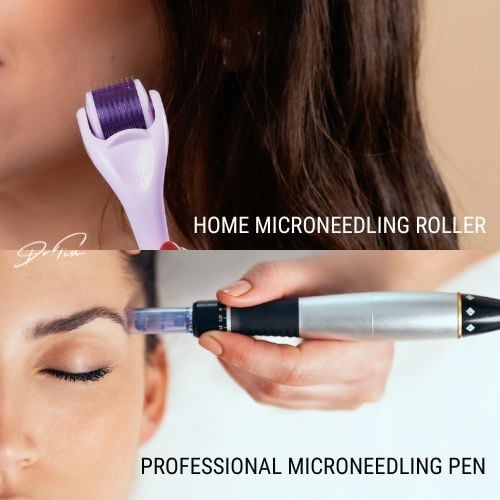
The beginning of ‘needle’ based Skin Therapy started with the needle stamp in 1995 and progressed to the Dermaroller in the early 2000’s. The Dermaroller spread globally in both medical and home-use forms and are still available today for home use.
In 2010 we saw the first automated pen devices which have been modified and updated to be more efficient and ergonomic pens we have today. Best examples are believed to be the Dermapen medical no 4 and the IMEDPEN hand pieces, both similarly priced at between £1,500 and £2,000, making it a highly affordable investment for Aesthetic Practitioners. (Needles and other consumables vary in price from £10 to £15 each).
In the 2020’s microneedling has been combined with other regenerative treatments including radio frequency, PRP (platelet rich plasma ) and its variations, chemical peels, polynucleotides and more recently Exosomes.
It remains on our treatment menu because it is one of the best devices to create micro-channels in varying depths of the skin allowing a variety of regenerative concoctions to be delivered transdermally.
These micro-channels temporarily increase skin permeability enabling delivery of actives, thus improving outcomes vs microneedling alone.
Microneedling works by causing a controlled dermal injury. The reaction to this injury by the skin is the wound healing response. Wound healing is a cascade of events beginning with a surge of nutrient rich blood arriving at the injury site. This blood brings with it inflammatory factors,including adrenaline,noradrenaline, prostaglandins and serotonin. Vessel permeability becomes enabled via histamine release, enabling anti-inflammatory leukocytes and plasma to enter vessels with ease. Macrophage derived growth factors are released, and lymphocytes also release epidermal and fibroblast growth factors.
Vascular endothelial growth factors promote angiogenesis (this is helpful for skin issues of chronic redness and rosacea).
A new extra -cellular matrix is cultivated via fibroblast release of collagen and fibronectin. Epithelial cells proliferate, providing dermal coverage, repair and protection.Elastin proliferation by fibroblasts occurs over several weeks to months helping restore skin elasticity and recoil.
Myofibroblasts contract the wound, apoptosis removes cells which are no longer needed and as the skin matures type 111 collagen is replaced by type 1 collagen and collagenase regulates and balances collagen production. This last phase can last from about day 20 following the needle injury up to 24 months.
NB – If healing is too rapid this may result in over-production of scar-type connective tissue, hence it has been found that having the end-point of micro-needling as the inflammatory (erythematous) response, rather than visible point bleeding is key to new skin quality.
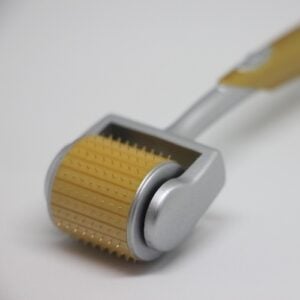 Many companies now produce home Dermaroller devices, varying in needle depth and obviously quality and price. Aesthetic practitioners need to be aware of this and dissuade their patients from using them, thinking this will be cheaper (from £10 up to £60) and just as effective as clinic treatments. The reasons for this are as follows :
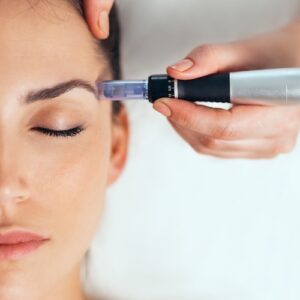 Automated microneedling devices are more expensive than home Dermaroller devices (ranging from £1,500 to £3,000)
Conditions effectively treated by an Automated Microneedling Procedure include the following :
The needling device can be used in conjunction with delivering the following:
Microneedling should not be performed on any of the following active conditions:
Microneedling has endured in the field of Aesthetics for decades, maintaining its reputation as one of the most effective and sought after skin rejuvenation treatments- valued both on its own and when integrated with other advanced procedures.
Microneedling continues to be one of the most widely performed skin rejuvenation procedures in aesthetic practice due to its proven efficacy, safety, and versatility.
By harnessing the skin’s natural wound-healing response to stimulate collagen and elastin, it delivers visible, natural-looking improvements in texture, tone, and scarring with minimal downtime. Its compatibility with all skin types, affordability, and ability to enhance the transdermal delivery of active ingredients have further cemented its place as a cornerstone treatment—both as a stand-alone therapy and in combination with other advanced modalities.
This article was written by a guest contributor from our community. The views and clinical opinions expressed here belong to the author and do not necessarily reflect the opinions or endorsements of Dr Tim Ltd.
Dr Tim Pearce MBChB BSc (Hons) MRCGP founded his eLearning concept in 2016 in order to provide readily accessible BOTOX® and dermal filler online courses for fellow Medical Aesthetics practitioners. His objective was to raise standards within the industry – a principle which remains just as relevant today.
Our exclusive video-led courses are designed to build confidence, knowledge and technique at every stage, working from foundation level to advanced treatments and management of complications.
Thousands of delegates have benefited from the courses and we’re highly rated on Trustpilot. For more information or to discuss which course is right for you, please get in touch with our friendly team.