

• Mail us: support@drtimpearce.com
  • Trustpilot
Dr Tim Pearce, eLearningDr Tim Pearce, eLearningDr Tim Pearce, eLearning Dr Tim Pearce, eLearning
  • eLearning Courses
        • ELEARNING COURSES

        • Techniques
          • BOTOX® Foundation Course
          • Pro Tox
          • Dermal Fillers Foundation Course
          • 8D Lip Design
          • Julie Horne Directs, Dr Tim Injects – February 2023
          • Eyelash Enhancement Serum Course
          • Anatomy360
          • Art Codes
        • Complications
          • Botulinum Toxin Complications Mastery
          • Dermal Filler Complications Mastery
          • Elective Lip Reversal
        • Profinity
        • Wellness
          • How To Introduce Longevity To Your Aesthetics Clinic
        • Marketing
          • DCAM 2.0
          • Canva Mastery: A Step-by-Step Guide
          • Email Marketing Course
          • Industry Photography Secrets
          • How to find your voice with video
        • Other Services
          • DPP for V300 Service
        • Packages
          • Foundation eLearning Package – SAVE 10%
          • Complications eLearning Package – SAVE 10%
          • Techniques eLearning Package – SAVE 20%
          • Marketing eLearning Package – SAVE 20%
          • Full eLearning Package – SAVE 35%
        • Reviews and Testimonials
        • FAQ – Online Courses
  • Downloads
        • Complications
          • 13 Extra Risky Injection Areas: Facial Vessel Map
          • Aspirating Experiment Test Results
          • Bruising Checklist: Prevent & Minimise Bruises from Injectables
          • Dermal Filler Complications: The Essential Guide
          • Delayed Onset Nodules: How To Diagnose And Treat
          • Diagnosing Complications: 7 Steps To Great Advice
          • Emergency Reversal Protocol
          • How To Avoid Causing a Lateral Rectus Palsy From Botulinum Toxins
          • Hyalase Consent Form: Downloadable Template
          • Lumps in Lips Guide: How to Diagnose, Manage & Treat
          • Tear Trough Oedema Protocol
          • Does Covid-19 Vaccine Cause Dermal Filler Reactions?
        • Injection Techniques
          • 26 Essential Injection Patterns For Botulinum Toxin
          • Botox Calculator
          • BOTOX Lesson – Gummy Smile
          • BOTOX Lesson – Hooded Eyes
          • Frequently Used Filler Volumes Facial Map
          • How To Improve Your Needle Control: 6-Step Blueprint
          • How to Prepare BOTOX – Step by Step Guide
        • Consultation Skills
          • Body Dysmorphia & Modification Checklist
          • Is It Safe To Treat? 5-Step Contraindication Check List
          • Medical Model For Cosmetic Procedures: An Essential Guide
        • Lips
          • Lip Consultation Question Checklist
          • Lip Anatomy Lesson
          • Common Needle/Cannula Choices For Lips
          • Lip Filler Aftercare Pack for Your Patients
          • Lip Design Blueprint – 4 Steps To Perfect Lip Augmentation
          • Master the Basics of Julie Horne’s Lip Technique
        • Longevity
          • Does HRT Increase Cancer Risk? Guide for Clinicians
          • Educating Patients About How Sugar Exacerbates Aging
          • How to Reduce Biological Age for Your Patients
        • Business & Marketing
          • Annual Profit Calculator
          • 5 Steps to Create a Successful Aesthetics Business
          • Injector’s Cheat Sheet – 7 Social Media Post Types
          • 7 Deadly Hashtag Sins
          • 7 Secret Locations to get Instagram Followers
          • 9 Video Marketing Mistakes
          • 15 Easy Instagram Reels Ideas
          • 3 Time-Saving Hacks for Social Media
          • Personal Branding Starter Kit
          • Value Audit Template: Price-per-1ml
          • World’s Top 5 Filler Brands – Survey Results
  • Products
    • Artistic Anatomy Poster Collection
    • Top 3 Posters Bundle
    • Original Anatomy Poster
    • Beautiful Lip Anatomy Poster
    • Download Pack – Forms & Leaflets
  • Blog
    • Meet the Writers
  • About
    • Dr Tim Pearce
    • Miranda Pearce
    • Careers & Recruitment
    • Become a Model
  • Contact
  • Login

Login

The Science Behind Microneedling: Are We Seeing A True Regeneration?

Blogs

  • ALL
  • Complications
  • Injection Techniques
  • Consultation Skills
  • Lips
  • Business & Marketing
You may be interested
The Science Behind Microneedling: Are We Seeing A True Regeneration?

The Science Behind Microneedling: Are We Seeing A True Regeneration?

July 28, 2026

Upper Face Botulinum Toxin in Male Patients

Upper Face Botulinum Toxin in Male Patients

July 23, 2026

Ending Filler Fatigue: Rebuilding the Face with PDGF and Polynucleotides


Ending Filler Fatigue: Rebuilding the Face with PDGF and Polynucleotides


July 21, 2026

Periorbital Oedema After Tear Trough Filler: Management Guide

Periorbital Oedema After Tear Trough Filler: Management Guide

July 16, 2026

Beyond the Skin: How Chronic Stress & Cortisol Impact Aesthetic Treatment Results

Beyond the Skin: How Chronic Stress & Cortisol Impact Aesthetic Treatment Results

July 14, 2026

The Science Behind Microneedling: Are We Seeing A True Regeneration?Dr Tim Pearce
July 28, 2026

Dr Shreya Seth


Introduction

Microneedling has been around for many years, but has recently gained popularity in the medical aesthetics world (Walsh, 2019). It is a minimally invasive procedure, which consists of small needles puncturing the dermis (Litchman, 2022; Jaiswal, 2024; Singh, 2016). This creates controlled trauma, which signals the body to start the healing cascade (Singh, 2016).

History

The concept of microneedling was first described in 1905, by a German dermatologist. However, many argue that the concept is similar to acupuncture, which was first described in China in 100 BC (Walsh, 2019).

In 1905, Dr Ernst Kromayer described a motorized device which gently treated pigmentation and skin scarring (Singh, 2016; Walsh, 2019). Following on in 1997, Dr Andre Camirand was able to improve the colour, texture and overall appearance of post-surgical facelift scars through the use of tattoo guns (Singh, 2016; Walsh, 2019). The Dermaroller was then developed in 2006 by Dr Desmond Fernandes (Iriate, 2017). All of these developments have led to microneedling as we know it today.

Background

Skin

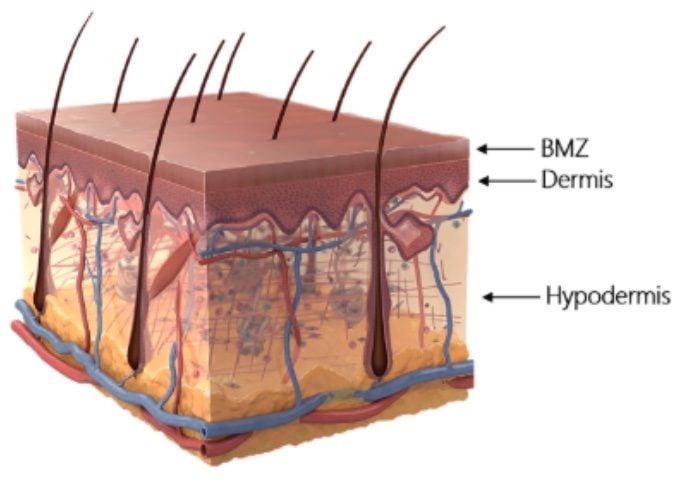
Layers of the skin (Abdo, 2020) Dr Shreya Seth
Image 1: Layers of the skin (Abdo, 2020) Dr Shreya Seth

The skin is the largest organ in the body and consists of the epidermis, dermis and hypodermis, as illustrated in image 1 (Abdo, 2020; Mayhew). Skin provides a barrier from

bacteria, helps retain water in the body and protects against chemicals, ultra-violet radiation and heat-related injury. Each layer consists of different cells, which have their own function (Abdo, 2020). The skin also contributes to homeostasis, synthesises vitamin D and responds to sensory stimuli (Abdo, 2020; Mayhew).

The epidermis is the most superficial layer, which consists of mature keratinocytes (Abdo, 2020; Mayhew; Yousef, 2024). There are also melanocytes, which produce melanin; Langerhans cells, which are dendritic cells; and Merkel cells, which detect stimuli (Abdo, 2020; Mayhew; Yousef, 2024). The epidermis can be further divided into five layers, which have different stages of keratinocytes in their maturation process.

The dermis is the middle layer of the skin and consists of two layers, called the papillary layer and the reticular layer. Within this layer, there are many types of cells and structures (Abdo, 2020; Mayhew; Yousef, 2024). Fibroblasts contribute to the production of collagen and elastin, which maintain tissue structure (Mayhew; Boraldi, 2024). They also produce growth factors and cytokines, which aids tissue healing and remodelling. The epidermis also contains blood vessels, nerves, hair follicles, glands and nails (Abdo, 2020).

The final layer is the hypodermis. This is where fat is stored subcutaneously, as well as nerves, blood vessels and hair follicles (Abdo, 2020; Mayhew; Yousef, 2024).

Mechanism of Action

Microneedling works in a few ways; by increasing collagen production, improving hyperpigmentation and reducing scar appearance. It also helps with improving drug absorption.

Collagen is increased through controlled micro trauma to the the dermis, which triggers the release of growth factors (Jaiswal, 2024). This includes connective tissue growth factor, transforming growth factor alpha (TGF-α), transforming growth factor beta (TGF-β), platelet derived growth factor (PGF), and fibroblast growth factor (Singh, 2016). A combination of these growth factors stimulate the fibroblasts to improve tissue structure by producing collagen (Jaiswal, 2024). Additionally, these growth factors cause neovascularisiation, which is the process of new blood vessels being formed (Jaiswal, 2024; Singh, 2026). For patients with acne vulgaris, the production of keratinocytes is reduced (Singh, 2026). A combination of all of the above improves skin quality (Jaiswal, 2024; Singh, 2016). It is also thought that microneedling has a role in hair restoration (Starace, 2019). The micro-trauma caused by the microneedling device actives the healing cascade, which stimulates a new hair cycle (Starace, 2019).

The micro channels formed during the process allows products to reach a deeper level of the skin, thus improving absorption and effectiveness (Jaiswal, 2024; Singh, 2016). Examples include exosomes, vitamins or growth factors can be applied topically following the procedure; the combination of both can lead to excellent patient results (Jaiswal, 2024; Singh, 2016; Wan, 2025).

Discussion

Many studies have looked into the efficacy of microneedling with improving skin conditions, such as acne, vitiligo, hair loss, melasma and skin rejuvination (Hamed, 2024; Alqam, 2022).

One literature review in 2015 found 12 out of 18 studies showed a statistically significant improvement in acne scaring (Hamed, 2024; Harris, 2015). In 2018, Ramaut et al found microneedling to be safe when treating skin conditions, such as aging and acne (Ramaut, 2018). Additionally, this systematic review found it had minimal side effects and could be used alone or in a combination with topical products or radiofrequency (Ramaut, 2018). A case study published by Costa et al found microneedling improved varicella scarring for a patient with Fitzpatrick Skin Type 6 (Hamed, R, 2024; Costa, 2014).

When considering hair loss treatment, studies have found improvements for both microneedling and microneedling combined with solutions such as platelet-rich plasma, minoxidil and growth factors (Hamed, 2024; English Jr, 2021). Faghihi et al noted a statistical improvement in thickness and number of hairs when microneedling with minoxidil, compared to minoxidil alone (Faghihi, 2021).

Throughout the literature, the lack of side effects and minimal down time has made microneedling a desirable procedure (2,11-16). Whilst some studies single-blinded or randomised their trial, the lack of double-blinded randomised control trials reduces the reliability of current research (Hamed, 2024; Harris, 2015; Ramaut, 2018; English, 2021). Many systematic reviews noted flawed methods and one review commented on research not publishing statistical significance; by conducting randomised trials, treatment protocols can be developed (Hamed, 2024; Harris, 2015; English, 2021; Faghihi, 2021).

Conclusion

Microneedling is a minimally-invasive procedure, which is preferred by patients due to the low side effect profile. Whilst systematic reviews have found some medium-level studies showing good results, more high-quality studies need to be conducted to improve treatment protocols.

References

  • Abdo, J.M., Sopko, N.A., Milner, S.M. (2020) ‘The Applied Anatomy of Human Skin: A Model for Regeneration’, Wound Medicine, 28, 100179.
  • Alqam, M., Wamsley, C.E., Hitchcock, T.M., Jones, B.C., Akgul, Y., Kenkel, J.M. (2022) ‘Efficacy and Tolerability of a Microneedling Device for Treating Wrinkles on the Face’, Journal of Cosmetic Dermatology, 22(1), 201-213.
  • Boraldi, F., Lofaro, F.D., Bonacorsi, S., Mazzilli, A., Garcia-Fernandez, M., Quaglino, D. (2024) ‘The Role Of Fibroblasts in Skin Homeostasis and Repair’ Biomedicines, 12(7), 1586.
  • Costa, I., Costa, M.C. (2014) ‘Microneedling for Varicella Scars in a Dark-Skinned Teenager’, Dermatological Surgery, 40(3), 333-334.
  • English Jr, R.S., Ruiz, S., DoAmaral, P. (2021) ‘Microneedling and Its Use in Hair Loss Disorders: A Systematic Review’, Dermatology and Therapy, 12(1), 41-60.
  • Faghihi, G., Nabavinejad, S., Mokhtari, F., Naeini, F.F., Iraji, F. (2021) ‘Microneedling in Androgenetic Alopecia; Comparing Two Different Depths of Microneedles’, Journal of Cosmetic Dermatology, 20(4), 1241-1247.
  • Hamed, R., Nahia, B.J.A., Alkilani, A.Z., Al-Adhami, Y., Obaidat, R. (2024) ‘Recent Advances in Microneedling-Assisted Cosmetic Applications’, Cosmetics, 11(2), 51.
  • Harris, A.G., Naldo, C., Murrell,D.F. (2015) ‘Skin Needling as a Treatment for Ance Scarring: An Up-To-Date Review of the Literature’, International Journal of Women’s Dermatology, 1(2), 77-81.
  • Iriarte, C., Awosika, O., Rengifo-Pardo, M., Ehrlich, A. (2017) ‘Review of Applications of Microneedling in Dermatology’, Clinical, Cosmetic and Investigational Dermatology, 10, 289-298.
  • Jaiswal, S., Jawage, S. (2024) ‘Microneedling in dermatology: A Comprehensive Review of Applications, Techniques, and Outcomes’, Cureus, 16(9), e70033.
  • Litchman, G., Nair, P.A., Badri, T., Kelly, S.E. (2022) ‘Microneedling’, StatPearls Publishing. Available at: https://pubmed.ncbi.nlm.nih.gov/29083607/ (Accessed: 23 January 2026).
  • Mayhew, J., Pandya, B. Ultrastructure of Skin. Available at: https://teachmeanatomy.info/the-basics/ultrastructure/skin/ Accessed 23 January 2026).
  • Ramaut, L., Hoesksema, H., Pirayesh, A., Stillaert, F., Monstery, S. (2018) ‘Microneedling: Where Do We Stand Now? A Systematic Review of the Literature’, Journal of Plastic, Reconstructive & Aesthetic Surgery , 71(1), 1-14.
  • Singh, A., Yadav, S. (2016) ‘Microneedling: Advances and Widening Horizons’, Indian Dermatology Online Journal, 7(4), 244-254.
  • Starace, M., Alessandrini, A., Brandi, N., Piraccini, B.M. (2019) ‘Preliminary Results of the Use of Scalp Microneedling in Different Types of Alopecia’, Journal of Cosmetic Dermatology, 19(3), 646-650.
  • Walsh, L. (2019) ‘Microneedling: a Versatile and Popular Treatment Option’. Available at: https://www.aestheticnursing.co.uk/content/comment/microneedling-a-versatile-and-popular-treatment-option (Accessed 23 January 2026).
  • Wan, J., Yoon, S.E., Yi, K.H. (2025) ‘The Efficacy of Combined Exosomes (Exodew) and Microneedling Treatment for Facial Pore Reduction and Skin Texture’, International Open Access Journal of the American Society of Plastic Surgeons’, 13(6), e5849.
  • Yousef, H., Alhajj, M., Fakoya, A.O., Sharma, S. ‘Anatomy, Skin (Integument), Epidermis’, StatPearls Publishing. Available at: https://www.ncbi.nlm.nih.gov/books/NBK470464/ (Accessed 23 January 2026).

Note:

This article was written by a guest contributor from our community. The views and clinical opinions expressed here belong to the author and do not necessarily reflect the opinions or endorsements of Dr Tim Ltd.

Dr Tim Pearce eLearning

Dr Tim Pearce MBChB BSc (Hons) MRCGP founded his eLearning concept in 2016 in order to provide readily accessible BOTOX® and dermal filler online courses for fellow Medical Aesthetics practitioners. His objective was to raise standards within the industry – a principle which remains just as relevant today.

Our exclusive video-led courses are designed to build confidence, knowledge and technique at every stage, working from foundation level to advanced treatments and management of complications.

Thousands of delegates have benefited from the courses and we’re highly rated on Trustpilot. For more information or to discuss which course is right for you, please get in touch with our friendly team.

Share This Article
Facebook Twitter Pinterest Linkedin
Prev Post

Related Articles

Upper Face Botulinum Toxin in Male Patients Bestseller

Upper Face Botulinum Toxin in Male Patients

July 23, 2026

Upper Face Botulinum Toxin in Male Patients
By Andrea Callaway
July 23, 2026

Upper Face Botulinum Toxin in Male Patients

READ MORE
Ending Filler Fatigue: Rebuilding the Face with PDGF and Polynucleotides
 Bestseller

Ending Filler Fatigue: Rebuilding the Face with PDGF and Polynucleotides


July 21, 2026

Ending Filler Fatigue: Rebuilding the Face with PDGF and Polynucleotides

By Andrea Callaway
July 21, 2026

Ending Filler Fatigue: Rebuilding the Face with PDGF and Polynucleotides


READ MORE
Periorbital Oedema After Tear Trough Filler: Management Guide Bestseller

Periorbital Oedema After Tear Trough Filler: Management Guide

July 16, 2026

Periorbital Oedema After Tear Trough Filler: Management Guide
By Andrea Callaway
July 16, 2026

Periorbital Oedema After Tear Trough Filler: Management Guide

READ MORE

Add your Comment

Popular Courses

BOTOX® Foundation Course

BOTOX® Foundation Course

Pro Tox

Pro Tox

8D Lip Design

8D Lip Design

SEE MORE

CONTACT US

    contact injection
    Dr Tim Pearce

    Improve your medical
    aesthetics business

    • Home
    • Courses
    • About
    • Contact
    • Dr Tim Limited Terms and Conditions of Sale
    • Privacy Policy
    • Website Terms Of Use
    • Careers
    Login Dr Tim Pearce Login
    © Copyright Dr Tim Ltd, 2025
    We use cookies on our website to give you the most relevant experience by remembering your preferences and repeat visits. Read More. By clicking “Accept All”, you consent to the use of ALL the cookies. However, you may visit "Cookie Settings" to provide a controlled consent.
    Cookie Settings Reject All Accept All
    Manage consent

    Privacy Overview

    This website uses cookies to improve your experience while you navigate through the website. Out of these, the cookies that are categorized as necessary are stored on your browser as they are essential for the working of basic functionalities of the website. We also use third-party cookies that help us analyze and understand how you use this website. These cookies will be stored in your browser only with your consent. You also have the option to opt-out of these cookies. But opting out of some of these cookies may affect your browsing experience.
    Necessary
    Always Enabled
    Necessary cookies are absolutely essential for the website to function properly. These cookies ensure basic functionalities and security features of the website, anonymously.
    CookieDurationDescription
    cookielawinfo-checkbox-analytics11 monthsThis cookie is set by GDPR Cookie Consent plugin. The cookie is used to store the user consent for the cookies in the category "Analytics".
    cookielawinfo-checkbox-functional11 monthsThe cookie is set by GDPR cookie consent to record the user consent for the cookies in the category "Functional".
    cookielawinfo-checkbox-necessary11 monthsThis cookie is set by GDPR Cookie Consent plugin. The cookies is used to store the user consent for the cookies in the category "Necessary".
    cookielawinfo-checkbox-others11 monthsThis cookie is set by GDPR Cookie Consent plugin. The cookie is used to store the user consent for the cookies in the category "Other.
    cookielawinfo-checkbox-performance11 monthsThis cookie is set by GDPR Cookie Consent plugin. The cookie is used to store the user consent for the cookies in the category "Performance".
    viewed_cookie_policy11 monthsThe cookie is set by the GDPR Cookie Consent plugin and is used to store whether or not user has consented to the use of cookies. It does not store any personal data.
    Functional
    Functional cookies help to perform certain functionalities like sharing the content of the website on social media platforms, collect feedbacks, and other third-party features.
    Performance
    Performance cookies are used to understand and analyze the key performance indexes of the website which helps in delivering a better user experience for the visitors.
    Analytics
    Analytical cookies are used to understand how visitors interact with the website. These cookies help provide information on metrics the number of visitors, bounce rate, traffic source, etc.
    Advertisement
    Advertisement cookies are used to provide visitors with relevant ads and marketing campaigns. These cookies track visitors across websites and collect information to provide customized ads.
    Others
    Other uncategorized cookies are those that are being analyzed and have not been classified into a category as yet.
    SAVE & ACCEPT